Most pimples change: they become less inflamed, flatten, drain, or heal. A spot that stays open, repeatedly crusts, bleeds, deepens, or heals and returns is asking a different question.
It may still have started with acne or picking. It could also be an infection, another inflammatory condition, or a skin growth. You cannot separate those safely with another serum or a close-up photo online.
The important move is simple: stop trying to clear it and start protecting and documenting it for medical assessment.
At a Glance
- Change the job: A non-healing spot is no longer a routine acne-treatment problem
- Stop now: Picking, squeezing, scraping, acids, retinoids, peels, and scar procedures on open skin
- Document: Take clear dated photos and list how the spot changed and everything applied to it
- Book care: A persistent open sore or a spot that heals and returns should be examined
- Same-day advice: Spreading redness or discoloration, warmth, swelling, pus, worsening pain, or fever can signal infection
- No pain is not clearance: Some concerning skin spots do not hurt or make you feel unwell
This guide belongs to the Acne & Breakouts hub.
Start here: five actions today
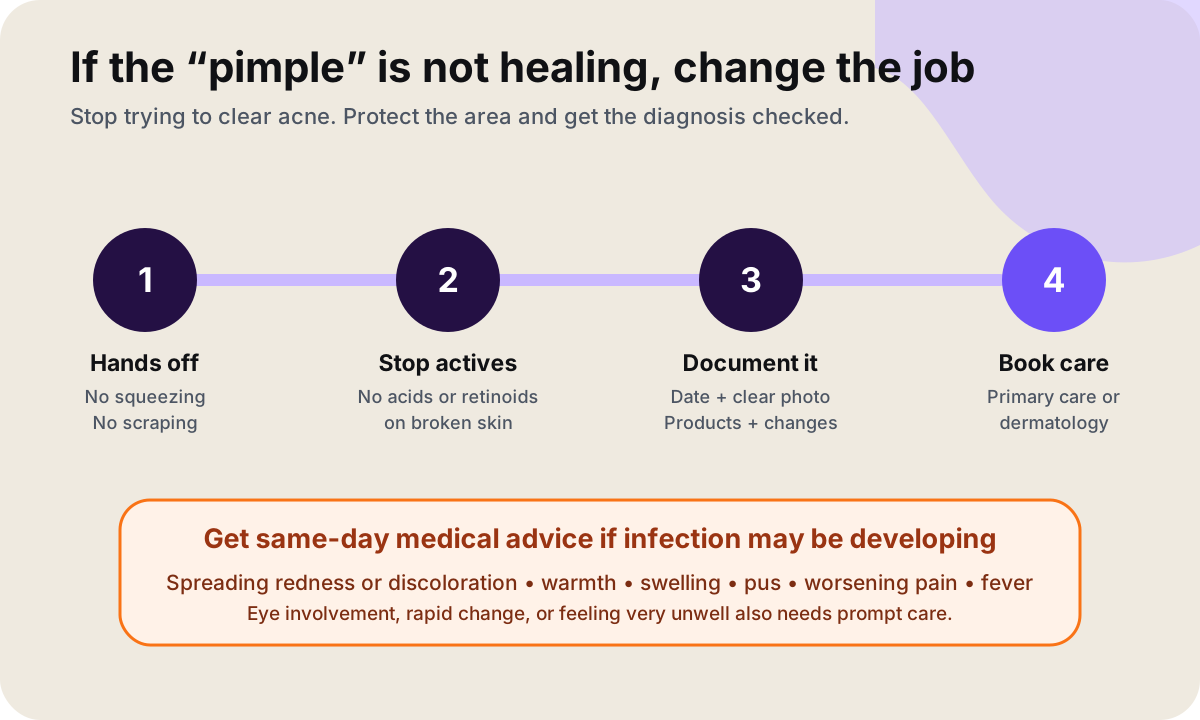
1. Take your hands and tools out of the equation
Do not squeeze, lance, scrape, tweeze, or repeatedly check the texture. Manipulation can reopen tissue, increase inflammation, introduce bacteria, and make the original problem harder to recognize.
If picking feels compulsive rather than optional, read Skin Picking, Healing & Acne Scars. That is a treatable loop, not a failure of willpower.
2. Stop active products on broken skin
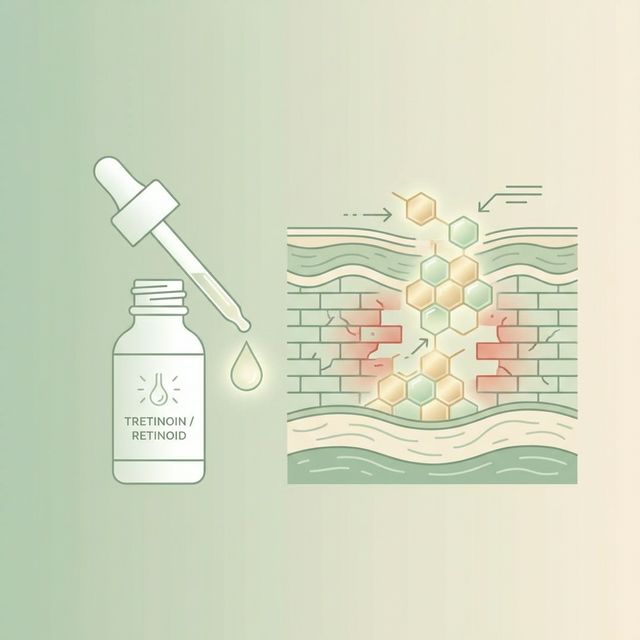
Do not apply retinoids, exfoliating acids, benzoyl peroxide, high-strength vitamin C, peels, or abrasive spot treatments to an open area. Do not perform microneedling, dermarolling, extraction, or scar treatment over it.
Prescription treatment is different: contact the prescriber for instructions rather than changing it silently.
3. Keep basic wound care basic
Wash your hands before touching the area. Gently clean superficial broken skin with mild soap and water, then pat dry. The American Academy of Dermatology commonly recommends plain petroleum jelly and a clean non-stick dressing for minor skin wounds rather than routine topical antibiotic ointment, which can cause allergic reactions and contributes to unnecessary antibiotic use.
Face location, depth, drainage, allergy, and the underlying cause can change that advice. If you are unsure whether the spot is a minor wound—or it is deep, infected-looking, or repeatedly reopening—ask a clinician or pharmacist what to use until you are seen.
4. Make a short record
Take one clear, well-lit photo with a wider view of the face and one closer view. Add the date. Then note:
- when it began and whether it ever fully closed;
- whether it bleeds, crusts, drains, itches, or changes color;
- pain, warmth, swelling, or numbness;
- picking, shaving, or other repeated trauma;
- every product and medicine applied;
- recent illness, immune suppression, diabetes, or delayed wound healing; and
- any new or changing spots elsewhere.
Do not use the photo to crowdsource a diagnosis. Use it to show change over time.
5. Arrange an examination
A primary-care clinician can assess infection, wound healing, medication, and whether dermatology is needed. Telehealth may help triage a clear visible problem, but a clinician may still need to touch the area or examine it with magnification. A dermatologist can evaluate persistent or suspicious skin lesions and perform a biopsy when needed.
Why “it does not hurt” is not reassuring enough
Pain is useful information, but its absence does not identify a harmless spot. The AAD notes that people with suspicious skin spots can feel completely well, and a concerning area does not have to hurt, itch, or bleed.
This does not mean every slow-healing pimple is cancer. Acne, picking, irritation, and infection are common. It means “no pain” should not cancel the decision to examine a spot that is visibly failing to heal or keeps returning.
Signs the problem may be urgent
Get same-day medical advice for possible infection
- redness or discoloration spreading away from the area;
- increasing warmth, swelling, or tenderness;
- pus, yellow or golden crust, or an unpleasant smell;
- red or dark streaking;
- worsening rather than improving pain;
- fever, chills, or feeling unusually unwell; or
- rapid change near the eye, nose, or mouth.
Seek urgent or emergency help
Use urgent local services for trouble breathing, facial or throat swelling, confusion, faintness, rapidly spreading severe swelling, severe eye pain, vision change, or signs of a serious allergic reaction or widespread infection.
The care-access ladder
The right entry point depends on severity and the health system where you live.
| Need | Possible first route |
|---|---|
| You need help deciding where to go | Pharmacist, nurse line, or local telehealth triage |
| The area is persistent but stable | Primary care or dermatology appointment |
| Infection signs are developing | Same-day primary care, urgent care, or equivalent local service |
| Rapid swelling, eye symptoms, breathing trouble, or severe illness | Emergency care |
If cost is the barrier, say that when booking. Ask about public clinics, primary care, telehealth, payment plans, or lower-cost referral routes. Do not let the belief that “only an expensive specialist counts” keep a concerning spot unassessed.
What not to do while you wait
- Do not rotate through antibiotics, antifungals, steroids, and acne products to see which one “wins.”
- Do not cover an infected-looking wound under heavy makeup or a tightly sealed cosmetic patch.
- Do not keep measuring it with your fingertips.
- Do not start scar massage, silicone sheets, microneedling, acids, or laser research while the skin is open.
- Do not let an AI skin scan or social-media photo opinion replace examination.
When to get medical help
Book an appointment for a sore that does not heal, a spot that heals and returns, unexplained repeated bleeding or crusting, a changing growth, or any lesion that looks different from the rest of your skin.
Get same-day advice for infection signs. Use urgent or emergency services for rapid progression, severe illness, significant eye involvement, or breathing/facial-swelling symptoms.
The goal is not to guess the worst. It is to stop losing time to the wrong job.
Questions to bring
- Does this look like acne, trauma, infection, dermatitis, or a growth?
- Is a swab, culture, dermoscopic exam, or biopsy needed?
- How should I clean and cover it until it heals?
- Which prescribed and over-the-counter products should stop near the area?
- What change would mean I need same-day help?
- When can scar care safely begin, if a scar remains?
FAQ
How long should a pimple take to heal?
There is no single deadline because lesion type, depth, picking, infection, medication, and health all matter. The decision should be based on the trajectory: a spot that stays open, repeatedly crusts or bleeds, deepens, or heals and returns needs examination.
Could picking be the only reason it will not heal?
Repeated picking can keep tissue open and raise infection and scarring risk. It should still be assessed if the wound is significant, infected-looking, or not healing; picking does not rule out another problem.
Should I put tretinoin on it for the scar?
Not on open, raw, or broken skin. First establish the diagnosis and allow the area to heal. Scar treatment comes later.
Do I need a dermatologist?
Not always as the first step. Primary care can assess infection and many skin problems and refer when needed. A persistent or suspicious lesion may ultimately need dermatology and sometimes a biopsy.
Related guides
- Skin picking, healing, and acne scars
- How to treat pitted acne scars
- Pores vs acne scars: how to tell
- Common skincare mistakes that worsen breakouts
Sources and review notes
- American Academy of Dermatology: How to tell if you may have skin cancer
- American Academy of Dermatology: When to use antibiotics on skin
- American Academy of Dermatology: Skin biopsy wound care
- American Academy of Dermatology: Acne scars and picking
This page is a care-navigation guide, not a diagnosis. A non-healing or infected-looking spot needs assessment by a qualified clinician.