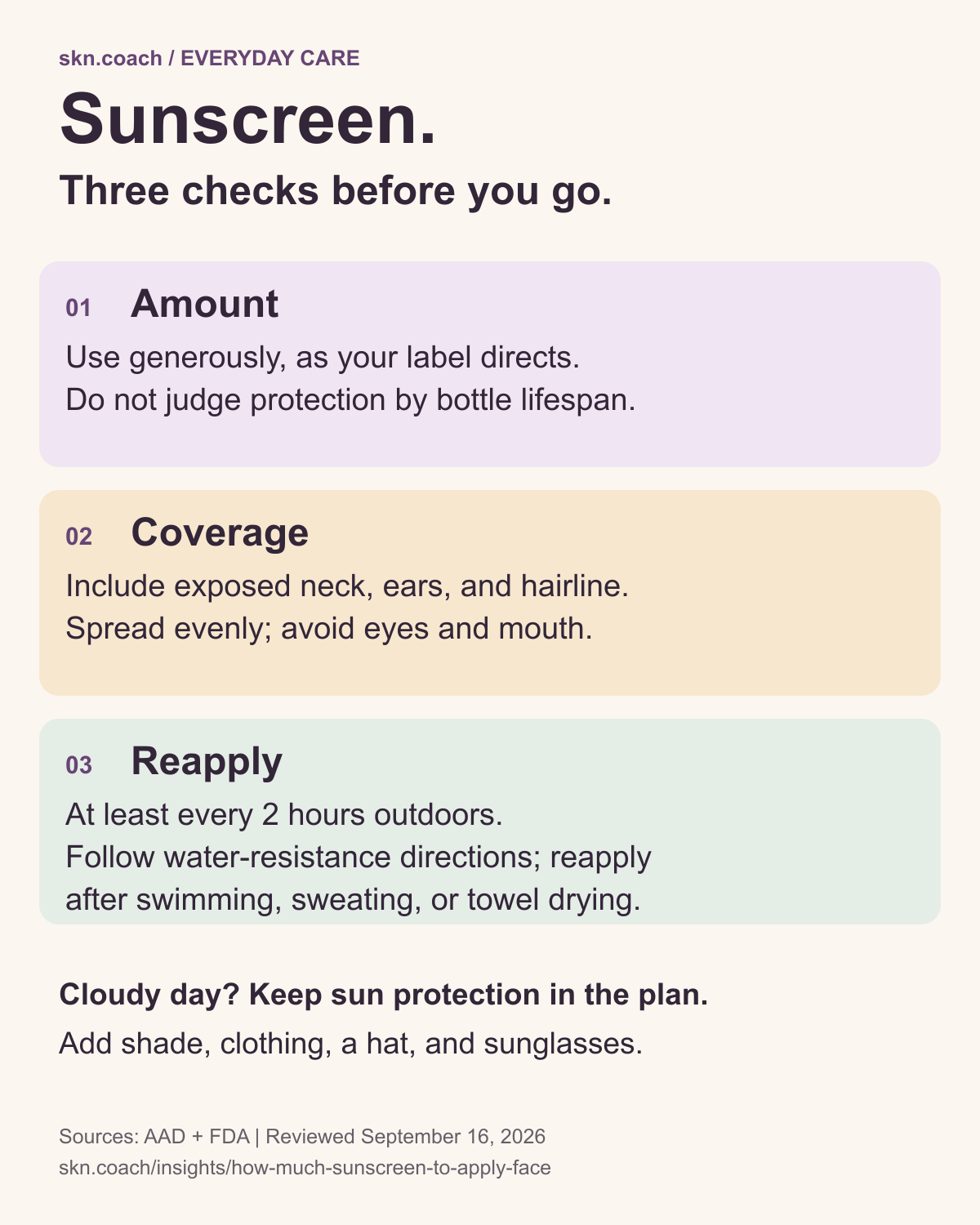
Check three things: how much you apply, which areas you cover, and when you renew that coverage. An SPF number alone cannot tell you whether today’s application is enough.
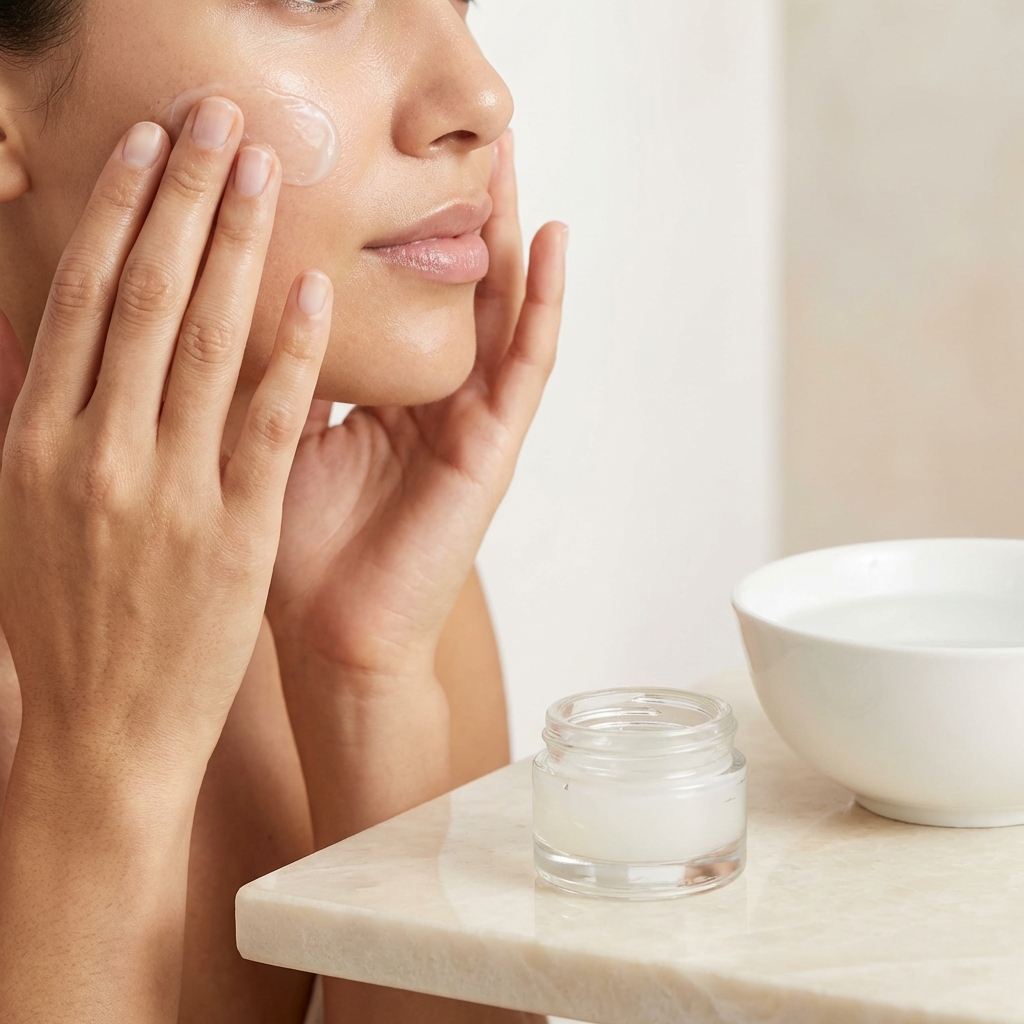
For adults, the American Academy of Dermatology (AAD) currently recommends at least 1 teaspoon for the face. Apply to your neck, ears, and other uncovered skin too. Its application guide also advises about 1 ounce for an adult’s uncovered body, with more needed for some body sizes. These are practical guides, not a personal measurement of protection.
This article belongs to our Sunscreen & Sun Protection guide. It uses US consumer guidance from the AAD and FDA. Follow the directions on the product sold where you live.
A 60-second check before you head out
- Amount: Have you read your product’s application directions, rather than using just enough to make it feel invisible?
- Coverage: Did you include ears, hairline, exposed neck, and backs of hands?
- Reapplication: Will you be outside long enough to need another application? Are you swimming, sweating, or using a towel?
- Other protection: Can you add shade, clothing, a hat, or sunglasses?
Step 1: Use an amount guide without treating it as a guarantee
The two-finger method is a handy visual cue, but a line squeezed from a tube is not a standardized measuring spoon. Finger length, nozzle width, and the shape of the line can change what you dispense. Do not assume two lines always equal a quarter teaspoon, or that they suit every face, neck, and product.
Keep the area clear: a face amount is not a face-plus-neck-plus-ears allowance. Apply generously to all exposed areas, following your label. If the directions are unclear, ask the manufacturer or a pharmacist how to use that specific formula.
A bottle’s lifespan cannot diagnose underapplication. Bottle size, covered area, applications per day, and sharing all affect how quickly it empties. Check your application directly instead of judging it by a calendar.
Step 2: Cover exposed skin before sun exposure
The FDA’s application guidance advises applying 15 minutes before sun exposure. Follow your product’s directions, including any instruction to shake it.
Spread it evenly and check the places that are easy to miss. Avoid getting it in your eyes or mouth. Spray sunscreen should not be sprayed directly onto the face. A spray, stick, and lotion can have different instructions; one technique does not cover every format.
For a simple morning routine, keep your familiar cleansing and moisturizing steps as needed, then make time for sunscreen before going outside. If makeup or other products cause pilling, review the layers you use. Do not solve the texture problem by deliberately cutting the sunscreen amount. Our pilling guide covers that separate troubleshooting task.
Step 3: Plan reapplication around your day
| Situation | Next step |
|---|---|
| Staying outdoors | Reapply at least every two hours. |
| Swimming or sweating | Follow the water-resistance directions and reapply as directed. |
| After towel drying | Reapply promptly; drying can remove sunscreen. |
| Wearing makeup | Plan a proper reapplication, rather than counting a light cosmetic touch-up as measured coverage. |
On US labels, water resistance is stated as 40 or 80 minutes. It does not mean waterproof or all-day protection. The AAD’s label guide explains these limits. A two-hour reminder should never make you wait when the product directions call for an earlier application.
Makeup adds a practical constraint. See reapplying sunscreen over makeup and check the directions for the sunscreen you actually use.
Cloudy days and other common questions
Do I need sunscreen when it is cloudy?
Yes, if you are going outside, keep sun protection in the plan. Clouds do not remove all harmful UV exposure. The AAD’s sunscreen FAQ recommends sunscreen on uncovered skin outdoors, including cloudy days. Cool weather is not a measure of UV protection.
Does SPF 50 let me apply less or wait longer?
No. Use the product as directed. The FDA explains that SPF compares sunburn protection; it is not a timer for how long you can stay outside. This guide does not convert a half application into a claimed personal SPF.
What if sunscreen feels too heavy?
Look for a formula you can use as directed, and review whether every layer underneath is necessary. Texture is a reason to reconsider the routine, not proof that you need less protection. Persistent irritation deserves advice from a pharmacist or clinician.
What about my evening routine?
Remove sunscreen and makeup with your usual gentle cleansing routine, then use moisturizer if needed. Nighttime skincare does not make up for missed sun protection during the day.
Keep a usable reminder
Download the sunscreen checklist for the bathroom shelf or your bag. It covers the same three checks without needing an app or account.
Sources reviewed September 16, 2026: AAD application guidance, sunscreen FAQ and label guide; FDA sunscreen guidance and SPF explanation, linked above. This is general education for adults, not individual medical advice. Ask your clinician about protection after a procedure or with a condition or medicine that changes sun sensitivity.