Part of Routine Order
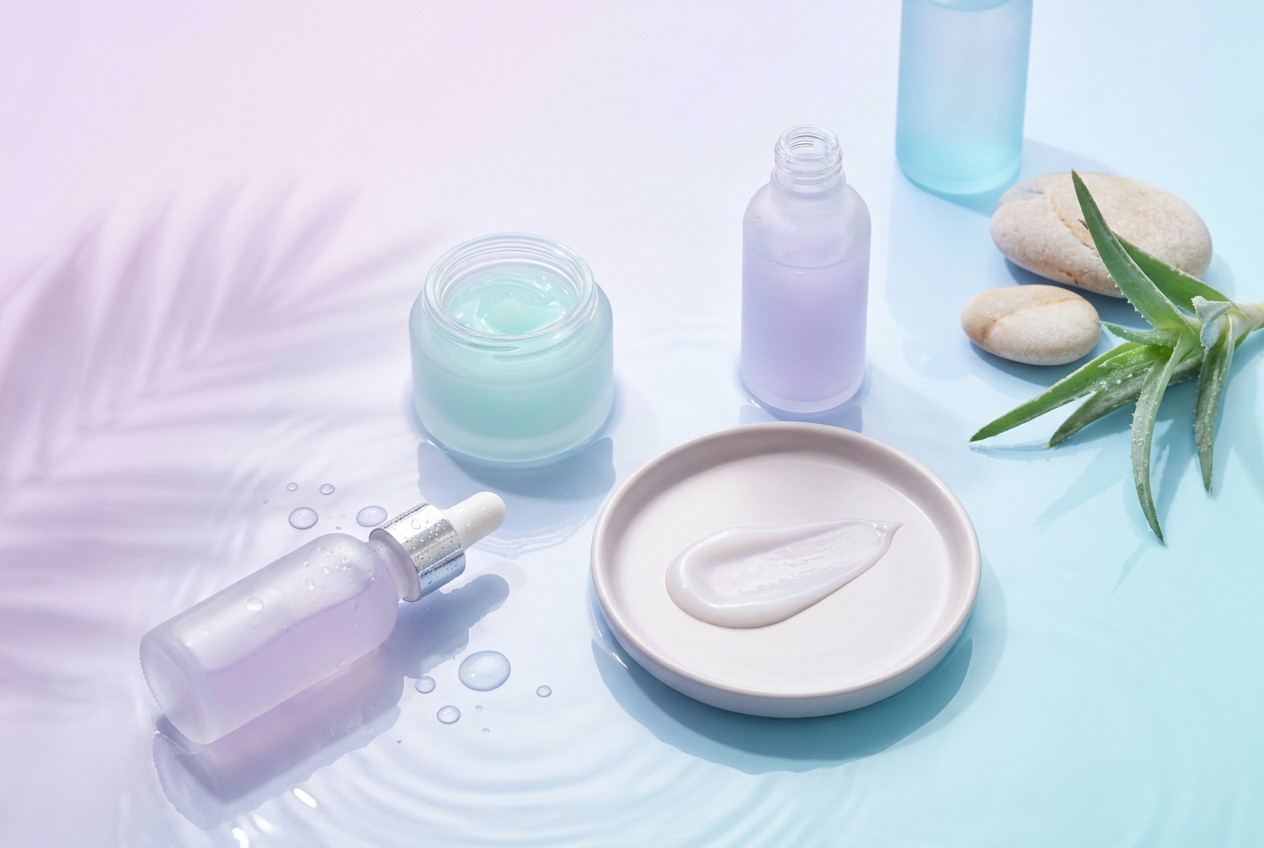
Hot, humid weather can change how skincare feels. If a rich cream feels sticky, try a lighter texture without replacing your whole routine. Keep what works, change one product at a time, and use Skin Coach to keep track of your routine and observations.
There is no need to replace products that still feel comfortable. If a product feels too heavy, change one at a time and check how your skin responds.
Your Summer Routine Transition Checklist
- Cleanser comfort — Keep your current cleanser if it removes what you need without discomfort. A gel or foam is an option, not a requirement or a guarantee against dryness.
- Moisturizer fit — If a cream feels too heavy, consider a lighter formula. Keep a richer product when it suits your skin; oil-free or gel labels do not guarantee a better fit.
- Sunscreen fit — Choose a broad-spectrum SPF 30 or higher that you can use as directed. Texture and marketing claims do not guarantee comfort or freedom from breakouts.
- Evening simplicity — Skip optional layers that feel unnecessary. A serum is not required, and heat alone does not mean a richer moisturizer must be removed.
- Reapplication plan — Carry sunscreen you can apply generously and evenly. Follow its water-resistance instructions when swimming or sweating, and reapply after towel drying.
A gel may feel lighter than a rich cream, but texture alone does not tell you whether a product suits your skin. Choose by comfort and dryness, and keep a richer moisturizer if you need it.
| Cream-Based Moisturizer | Gel-Based Moisturizer |
|---|---|
| Often richer in texture; ingredients vary by formula | Often lighter in texture; ingredients vary by formula |
| May suit skin that needs a richer-feeling moisturizer | May suit someone who prefers a lighter-feeling moisturizer |
| May feel heavy to some people in humid weather | Comfort depends on the finished formula, not the gel label |
| Use when needed and as directed, rather than only at night | Check how the exact product layers without reducing sunscreen coverage |
Morning
- Gentle cleanser if needed; keep a comfortable existing formula
- Optional serum only if it has a clear purpose and suitable directions
- Suitable moisturizer if needed for comfort or dryness
- Broad-spectrum SPF 30 or higher; follow the reapplication label and outdoor guidance
Evening
- Gentle cleansing that removes the products you used; two cleanses are not always necessary
- Optional treatment only as directed on the label or by your clinician
- Optional hydrating product if useful; a separate serum is not required
- A moisturizer that suits your needs; gel and oil-free are optional features
Exfoliation is optional, and more is not necessarily better in summer. Avoid exfoliating sunburned or irritated skin. If you already use an acne medicine or retinoid, ask a clinician before adding another potentially irritating product.
May be an optional ingredient to consider, but benefit and tolerability depend on the finished product. Do not use it to diagnose or treat new heat-related redness.
A humectant used in many products. The whole formula determines its feel and how it layers; the ingredient does not guarantee a light finish.
May feel cooling in some formulas, but botanical ingredients can still cause reactions. A gel does not replace assessment of painful or persistent irritation.
Can feel heavy to some people and comfortable to others. Heat alone is not a reason to remove an otherwise suitable product; lanolin and petrolatum are different ingredients.
Some formulas may feel rich. Judge the finished product and your response; the presence of a plant butter alone does not predict breakouts.
Transitioning your routine doesn’t happen overnight. Rushing into new products can cause irritation, especially if you’re also increasing sun exposure. A gradual approach helps your skin adapt.
A Gradual Summer Routine Review
- First check Review the basics Keep products that work. If a change is useful, change one optional product at a time. There is no required two-week switch or promise that your skin will adapt on a schedule.
- Later review Streamline your evening Keep the steps that leave your skin comfortable. Exfoliation is optional; follow the product label and avoid adding it to irritated or sunburned skin. Ask your prescriber before changing prescribed treatment.
Keep sun protection part of the routine: shade, protective clothing and a broad-spectrum sunscreen. Swimming, sweating and towel drying can remove sunscreen, so follow the label when reapplying.
For step-by-step guidance, read how to reapply sunscreen over makeup.
Frequently asked questions
Can I skip moisturizer and just use SPF in summer?
Some people find their sunscreen moisturizing enough; others prefer a separate moisturizer. Choose by comfort and the product directions. Keep the full sunscreen amount and reapplication plan either way.
How often should I reapply sunscreen when I'm sweating?
Check your sunscreen label. US water-resistance claims are for 40 or 80 minutes of swimming or sweating, depending on the product. Reapply as directed, immediately after towel drying, and at least every two hours outdoors. Water resistant does not mean waterproof.
Do I still need a night cream if it's hot?
Not necessarily, but a rich cream is not automatically unsuitable in summer. Use a moisturizer that meets your needs and its directions. Do not restrict useful care to occasional use simply because the weather is hot.
Can I keep using retinol in the summer?
Summer alone does not determine whether retinol suits you. Follow the product directions, use sun protection, and ask a clinician if irritation develops. Do not change a prescribed retinoid schedule without checking with your prescriber. Retinoids should be avoided during pregnancy; ask your clinician about breastfeeding.
Sources
This article is for educational purposes only and does not constitute medical advice. Always consult with a board-certified dermatologist for persistent skin concerns or before introducing new active ingredients.