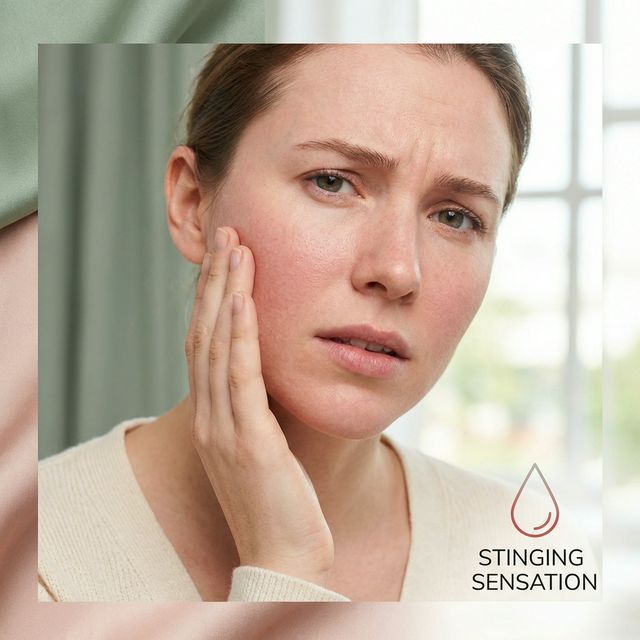
You apply your serum and—ouch. Burning, stinging, or that uncomfortable tingling sensation. Is this normal? Is the product working? Or is something wrong?
The answer depends on which product is stinging, how long it lasts, and what else is happening to your skin. Here’s how to decode what your skin is telling you.
At a Glance
- Normal stinging: Vitamin C, certain acids—brief tingle (under 2 min), no redness
- Warning sign: Stinging from moisturizer, lasting burn, redness, or peeling
- #1 cause: Damaged skin barrier allows ingredients to penetrate too deeply
- Quick fix: Stop all actives, simplify routine, repair barrier first
- Rule of thumb: If it used to feel fine and now stings—barrier damage, not the product
Start here → Skin Barrier & Sensitivity Hub — your complete guide to barrier health and gentle skincare.
60-Second Self Check
Which situation matches yours?
Situation A — Product-specific stinging:
- Only one product stings (e.g., vitamin C serum)
- Stinging lasts under 2 minutes
- No visible redness or irritation afterward
- Other products feel fine
→ Likely normal. Some actives cause temporary, harmless stinging.
Situation B — Multiple products sting:
- Moisturizer stings (should never sting)
- Stinging lasts more than 2-3 minutes
- Visible redness, tightness, or peeling
- Products that used to feel fine now sting
→ Barrier damage. Your skin’s protective layer is compromised.
Situation C — Immediate severe reaction:
- Burning starts immediately and intensifies
- Hives, swelling, or spreading redness
- Reaction to a new ingredient
→ Possible allergy. Wash off immediately. Discontinue product.
Why Products Sting: 4 Causes
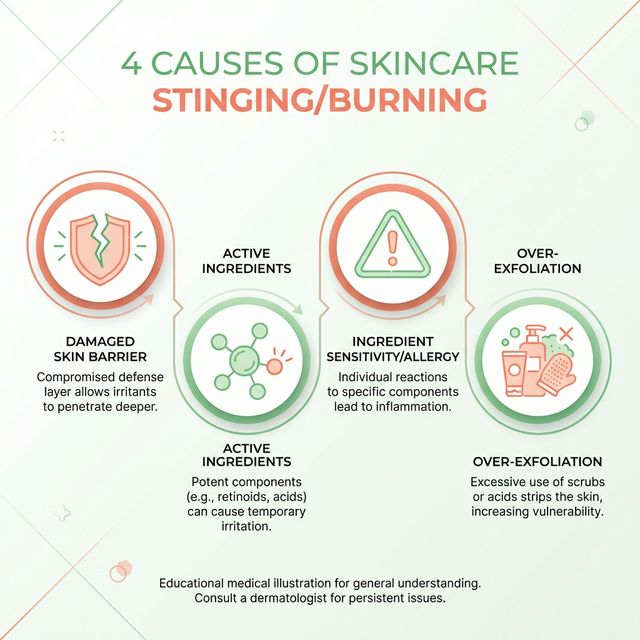
1. Damaged Skin Barrier (Most Common)
Your skin barrier is the outermost protective layer. When it’s intact, it keeps irritants out. When it’s damaged:
- Ingredients penetrate deeper than they should
- Nerve endings get exposed to active ingredients
- Even gentle products can trigger stinging
Signs it’s barrier damage:
- Multiple products sting (not just actives)
- Moisturizer or SPF causes tingling
- Skin looks shiny but feels tight
- Products that used to feel fine now irritate
2. Active Ingredients (Often Normal)
Some ingredients are designed to penetrate and work—causing brief, expected stinging:
| Ingredient | Expected Sensation | When to Worry |
|---|---|---|
| Vitamin C (L-AA) | Mild tingle 30-60 sec | Burning >2 min, redness |
| AHAs (glycolic, lactic) | Light sting first few uses | Persistent burning, peeling |
| BHAs (salicylic) | Slight tingle | Burning, white patches |
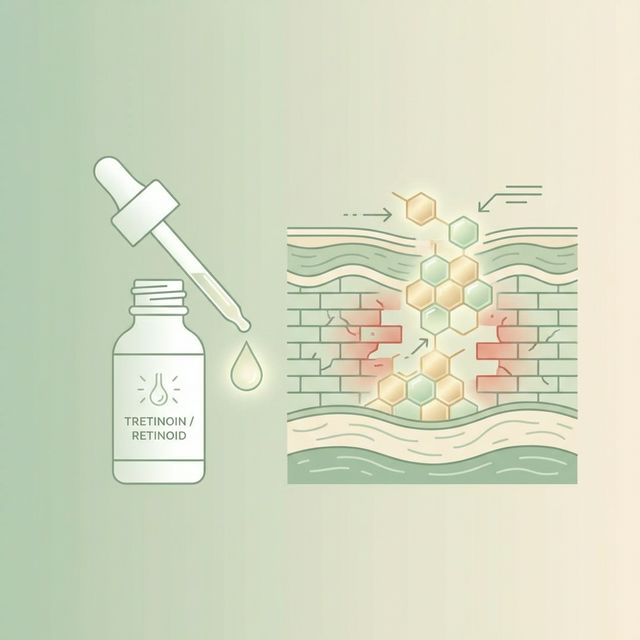
| Retinoids | Mild warmth | Intense burning, scaling |
| Niacinamide | Usually none | Any stinging = too high % or sensitivity |
Rule: Brief tingle that fades = normal. Lasting burn with redness = stop.
3. Ingredient Sensitivity or Allergy
Some people react to specific ingredients regardless of barrier health:
- Fragrance — biggest sensitizer, even “natural” fragrances
- Essential oils — common irritants (lavender, citrus, eucalyptus)
- Preservatives — methylisothiazolinone, phenoxyethanol
- Alcohols — denatured alcohol in high amounts
Allergy vs. irritation:
- Irritation = immediate sting, stops when you wash off
- Allergy = delayed reaction (hours later), may include swelling, hives
4. Over-Exfoliation
Using too many actives strips the barrier:
- Combining AHA + BHA + retinoid
- Daily exfoliation
- High-percentage acids without building tolerance
Result: Raw, sensitized skin that reacts to everything.
What to Do: Step by Step
If It’s Barrier Damage
Step 1: Stop all actives immediately
- No acids (AHA, BHA, vitamin C)
- No retinoids
- No exfoliating scrubs
Step 2: Simplify to 3 products only
- Gentle cleanser (cream or milk, fragrance-free)
- Barrier-repair moisturizer (ceramides, cholesterol, fatty acids)
- SPF (mineral may be gentler)
Step 3: Repair for 7-14 days
- Resist adding products back
- No actives until stinging stops completely
Step 4: Reintroduce slowly
- One product at a time
- Start 1-2x/week
- Full guide: How to Repair Your Skin Barrier
If It’s a Specific Product
Step 1: Identify the culprit
- Stop using the stinging product for 3 days
- Reintroduce to confirm
Step 2: Check the ingredient list
- Fragrance? Essential oils? High-percentage acids?
- Compare to products that don’t sting
Step 3: Adjust usage
- Buffer with moisturizer first (e.g., before vitamin C)
- Reduce frequency
- Try lower concentration
If It’s an Allergy
Step 1: Wash off immediately
- Gentle cleanser, lukewarm water
- Pat dry, apply plain moisturizer
Step 2: Avoid the ingredient entirely
- Note the ingredient list
- Cross-reference with other products
Step 3: See a dermatologist if
- Reaction spreads or worsens
- Swelling around eyes or lips
- Hives or lasting redness
The Repair Routine
AM Routine (Barrier Repair Mode)
- Splash with lukewarm water (or gentle cream cleanser)
- Hydrating toner or essence (optional, fragrance-free)
- Barrier-repair moisturizer
- SPF 30+ (mineral if tolerated better)
PM Routine (Barrier Repair Mode)
- Gentle oil or cream cleanser
- Optional: second gentle cleanser if wearing SPF/makeup
- Hydrating serum (hyaluronic acid, panthenol)
- Rich barrier-repair moisturizer or sleeping mask
How long: Most people see improvement in 7-14 days. Severe damage may take 3-4 weeks.
Common Mistakes
1. Pushing Through the Burn
“It means it’s working” is a myth. Extended burning means damage.
Fix: If stinging lasts >2 minutes, wash off. Reassess the product.
2. Switching to “Sensitive Skin” Products Too Fast
Many “sensitive skin” products still contain fragrance or irritating ingredients.
Fix: Read ingredient lists. Look for: fragrance-free, no essential oils, minimal ingredients.
3. Adding Soothing Products on Top of Irritating Ones
Layering aloe or centella over a product that’s burning doesn’t fix the problem.
Fix: Remove the irritating product first. Then soothe.
4. Blame the Last Product You Applied
Sometimes stinging is cumulative—earlier layers caused the damage.
Fix: Simplify entire routine, then add back one product at a time.
5. Reintroducing Actives Too Soon
Barrier feels better after 5 days—you add back your retinoid—stinging returns.
Fix: Wait until stinging stops for 1-2 weeks before reintroducing actives.
FAQ
Is it normal for vitamin C to sting?
Mild tingling for 30-60 seconds is common with L-ascorbic acid formulas, especially at higher concentrations (15-20%). If it burns for longer or causes redness, your barrier may be compromised—pause and repair first.
Why does my moisturizer suddenly sting?
If your moisturizer stings when it didn’t before, your barrier is damaged. Moisturizers should never sting on healthy skin. This is the clearest sign you need a barrier reset. See Over-Exfoliated Skin Reset.
Can I become allergic to a product I’ve used for years?
Yes. Allergies can develop over time with repeated exposure. If a long-used product suddenly causes hives, swelling, or intense burning, it may be a new allergy. Stop use and consult a dermatologist.
How do I know if it’s the product or my skin?
Test: Apply the product to your inner forearm (less sensitive). If it stings there too, it’s the product. If only your face reacts, your facial barrier is likely compromised.
Is tingling the same as burning?
Tingling is a light, brief sensation that fades quickly. Burning is more intense, lasts longer, and often comes with redness. Tingling from actives = often okay. Burning = stop and assess.
The Bottom Line
Stinging is your skin’s alarm system. Listen to it:
- Brief tingle from actives → usually normal, monitor
- Lasting burn or moisturizer sting → barrier damage, repair needed
- Immediate severe reaction → possible allergy, discontinue
When in doubt, simplify. Your skin will tell you when it’s ready for actives again.
Need help building a barrier-repair routine for your skin? Start a skin scan for personalized recommendations.
Related Guides
- Skin Barrier & Sensitivity Hub — your complete barrier health guide
- Over-Exfoliated Skin: The 7-Day Reset — the recovery protocol
- How to Repair Your Skin Barrier — complete repair guide
This content is for informational purposes only and does not replace professional medical advice. Consult a board-certified dermatologist for personalized treatment recommendations.