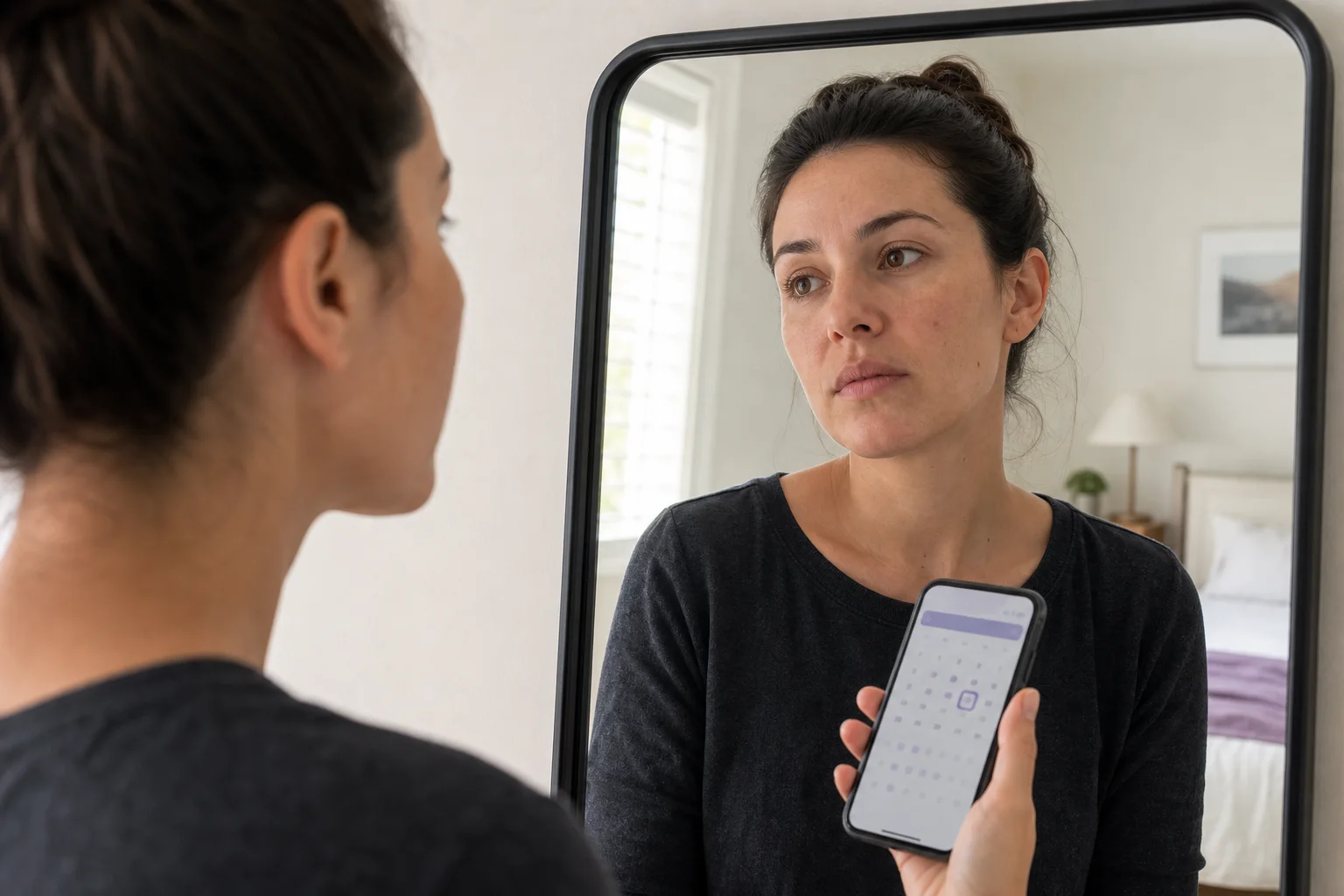
You have bought a retinol, vitamin C serum or exfoliating acid. The next step is to check what that particular product asks you to do, not to fit it into a universal five-week calendar.
“Active” is a broad skincare term. It can describe an optional cosmetic ingredient or an ingredient in a medicine. These products differ in purpose, formula and directions. A slower introduction may be appropriate for some products, but no schedule can guarantee that your skin will tolerate them.
This guide helps you decide what to check, what to record and which questions belong with a pharmacist or prescriber.
At a Glance
- Choose a purpose: Add a product for a specific need, not to complete an ingredient collection.
- Read its directions: Amount, frequency, application area and rinse-off instructions belong to the exact formula.
- Keep the routine understandable: Change one optional product at a time.
- Take reactions seriously: Burning, itching or a rash is not proof that a product is working.
- Keep medicine decisions with your clinician: Do not invent a dose, pause or restart plan from a cosmetic routine.
Start here → Skin Barrier & Sensitivity Hub for related guides.
Before You Start
If your skin feels comfortable
Check whether your existing cleanser, moisturizer and sun protection suit you. Then ask what the new product is meant to address and whether it duplicates something you already use. A routine can be complete without a separate vitamin C serum, acid or retinol.
Read the full directions before opening another bottle. An ingredient percentage on the front does not tell you where the formula should be applied or whether it should be washed off.
If your skin is already irritated
Do not add an optional active to fix unexplained stinging, a rash or peeling. Review recent changes and seek advice if symptoms persist, recur or are severe. Our skin barrier guide explains how to organize that review without assuming a diagnosis.
If you reacted to a previous product
Write down what happened and keep the old product name if possible. A reaction does not necessarily mean you used it too quickly. The formula itself may be unsuitable, or another condition may need assessment. Ask before retrying a product linked to a significant reaction.
If a big event is coming up
Consider whether an optional change can wait. There is no reliable guarantee that new irritation will settle before a wedding or another important date. Use the wedding skin-prep guide to organize decisions, while keeping prescribed-treatment changes with your clinician.
Read the Product as a Whole
Use this checklist before the first application:
| Check | Why it matters |
|---|---|
| Intended use | A cosmetic serum, acne medicine and professional peel are different products |
| Application area | A facial product may exclude eyelids, lips, broken skin or other areas |
| Amount and frequency | More product or more frequent use can exceed the directions |
| Contact time | Rinse-off and leave-on products are not interchangeable |
| Other products | Your existing routine may contain a similar ingredient or another source of irritation |
| Warnings | Pregnancy, age, allergies, procedures and other medicines may change suitability |
| Storage and expiry | Follow the package rather than relying on a colour or smell rule from another formula |
If the label is unclear, ask the manufacturer or a pharmacist. Do not translate an unfamiliar concentration into a dose by comparing it with a different brand.
Testing a New Cosmetic
A small-area trial can help you notice a reaction before wider use. The AAD’s guidance on testing skincare products describes repeated testing of ordinary cosmetics over seven to ten days. That general guidance does not override a medicine leaflet or justify repeated use of a peel, retinoid or acid beyond its directions.
Ask how to test a product when you are unsure. Do not test it on irritated skin or deliberately repeat a product that caused a significant reaction. If you react, stop the cosmetic and get advice as needed.
A home trial is not medical patch testing. Medical testing can investigate a suspected contact allergy. An uneventful small-area trial does not guarantee comfort on your face, eyelids or neck, and it does not prove that future use cannot cause a problem.
Make One Change at a Time
Keeping other products stable makes your experience easier to interpret. Record the first use, the amount and the application area. If a problem appears, that record is more helpful than trying to remember which of several new products came first.
There is no universal number of days you must wait before introducing every second product. Consider the directions, your response and any advice you have received. If you are still unsure whether the first product suits you, adding another one creates more uncertainty.
You do not have to increase frequency simply because a calendar says the next stage has arrived. For a medicine, ask the prescriber about the intended regimen and what to do if it is uncomfortable. For a cosmetic, staying within its directions matters more than reaching the highest frequency someone else uses.
What About Moisturizer Before an Active?
Applying moisturizer before or after a treatment is sometimes called buffering or the sandwich method. It is not a universal instruction for every ingredient, and it does not guarantee the same effect with less irritation.
Check whether the product should go on dry skin, whether a moisturizer can be used with it and what order is advised. Do not mix a medicine into a jar of moisturizer to create a homemade lower strength. The amount and distribution would be uncertain.
A separate moisturizer layer also cannot make an unsuitable product safe for the eyelids, a rash or broken skin. Our buffering guide gives questions to take to your pharmacist or prescriber.
Different Products Need Different Decisions
Retinol and prescription retinoids
Cosmetic retinol and medicines such as tretinoin or adapalene are not interchangeable. Availability and approved uses differ by country. Check the local label and keep prescription changes with the clinician who knows your treatment.
The AAD advises against retinoids during pregnancy. If you are planning pregnancy or breastfeeding, ask about the specific product before starting. Do not use a generic “low strength” rule as permission.
Dryness or irritation can occur, but a skincare article cannot decide that your particular reaction is an expected adjustment. Follow the medicine information and seek advice rather than pushing through symptoms to meet a schedule.
Vitamin C products
Different vitamin C forms and finished formulas have different directions. Some are watery, some are oils or creams, and some contain several other highlighted ingredients. You cannot predict tolerance from “vitamin C” or its percentage alone.
A tingling sensation is not required for benefit. Do not use a timer to decide that burning is acceptable, or place a product near the eyes unless its directions allow it. Vitamin C does not replace sunscreen.
Alpha hydroxy acids
AHAs include ingredients such as glycolic and lactic acid. Their effects depend on the whole formula, not only the ingredient name. A rinse-off product and a leave-on one should not share a guessed contact time.
The FDA explains that AHA products can increase sun sensitivity. Follow the sun-protection warning, including any period after use stops. Do not attempt a professional peel at home because a lower-strength product felt comfortable.
Salicylic acid products
A salicylic acid cleanser, leave-on acne medicine and concentrated spot treatment have different uses. Read the directions and warnings for the exact one you have, including the area and amount.
Do not combine several salicylic acid steps automatically. If you already use acne treatment, ask whether another product adds a useful benefit or more irritation. See BHA 2% for Beginners for a label-focused review.
Fit the Product Into an Ordinary Routine
Morning
- Gentle cleansing if needed.
- Any treatment or optional cosmetic only in the order and amount its directions allow.
- A tolerated moisturizer as needed.
- Broad-spectrum SPF 30 or higher sunscreen as directed, alongside shade and protective clothing.
Evening
- Gently remove sunscreen and makeup with a suitable cleanser.
- Follow the directions for any treatment, including skin dryness and application-area instructions.
- Use moisturizer in the order advised for the products involved.
A second cleanse, hydrating toner and eye cream are optional. A routine with fewer steps is easier to follow and does not need extra products to earn a “complete” label.
If Your Skin Reacts
Stop an optional cosmetic that causes a reaction and gently remove it if it is still on the skin, following the product directions. Do not add another active to counteract it. For medicines, follow the patient leaflet and contact your prescriber or pharmacist about next steps.
Seek urgent medical advice for severe or rapidly worsening pain, marked swelling, extensive blistering, discharge, fever or feeling unwell. Eye pain or changes in vision need prompt assessment. Breathing difficulty or swelling of the lips, tongue or throat needs emergency help.
Do not call a reaction purging solely because it started after a new ingredient. A photo, location or number of weeks cannot establish that diagnosis. Keep the product and symptom record so the problem can be assessed.
Before Waxing, a Facial or Another Procedure
Tell the practitioner about all medicines and active products you use. Ask for written preparation and aftercare instructions for the actual procedure. If those instructions affect a prescribed medicine, involve the prescriber too.
There is no single five-day or seven-day pause that applies to every facial, peel, laser, wax or microneedling treatment. Do not restart because a generic calendar has elapsed while the area is still uncomfortable.
FAQ
How long until I see results?
It depends on the purpose, product and person. Use the product information or treatment plan to set expectations. A universal results deadline can encourage unnecessary increases in strength or frequency.
Can I use retinol and acids together?
Some routines include both, but that does not make the combination appropriate for everyone. Check the exact products and your treatment plan. Our comparison guide explains what to review.
Does sensitive skin rule out all actives?
No single label answers that question. Your symptoms, history and the product matter. If you have an ongoing skin condition or repeated reactions, ask for advice before adding another optional active.
Is a rest night necessary?
A cosmetic routine can include evenings without optional products. Medicines should follow their prescribed schedule. There is no universal number of rest nights that prevents irritation.
Can skncoach choose a safe dose for me?
No. You can organize your routine and observations, but an app cannot diagnose a reaction or replace medicine instructions. Use the record to make a discussion with a clinician or pharmacist more specific.
Related Guides
- How to Repair Your Skin Barrier
- Over-Exfoliated Skin: What to Do Next
- Retinol Buffering and Sandwich Method
- Skin Barrier & Sensitivity Hub
This guide provides general information and does not replace individual medical advice.