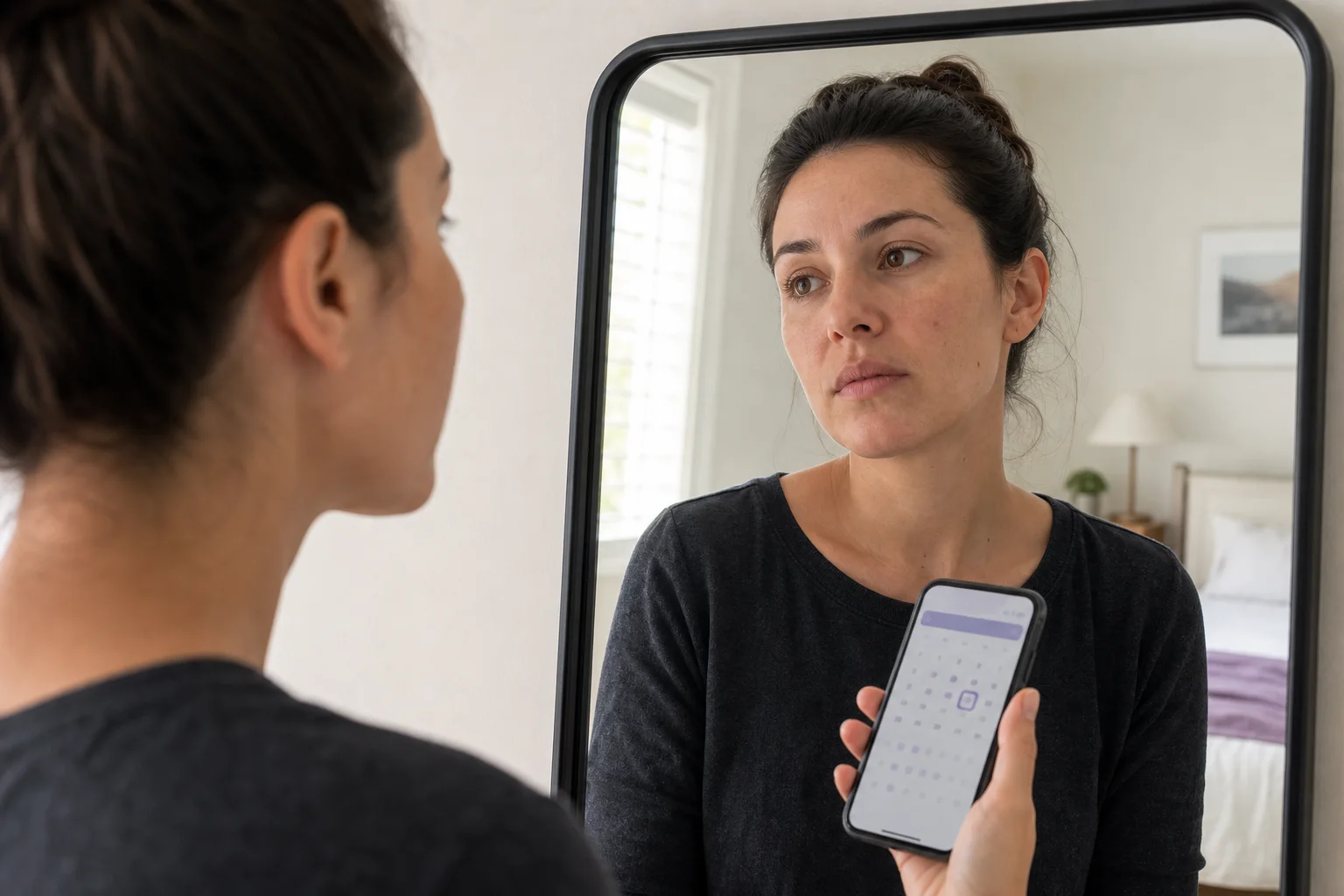
If metronidazole has not helped as expected, the useful next step is a review of the product, the symptom being treated and what has happened during use. That review may lead to a different plan, but it does not automatically mean you need a stronger medicine.
This guide helps you prepare for that conversation. It cannot diagnose why treatment has not worked or tell you which medicine to use next.
At a Glance
- Check the product: Formulation, instructions and other ingredients matter.
- Describe the response: Separate changes in bumps, lasting redness, flushing and discomfort.
- Use your review plan: Ask the prescriber when to assess benefit; seek earlier advice for problems.
- Discuss alternatives: A different topical, oral treatment or procedure may address a different goal.
- Do not wait on eye symptoms: Eye pain or vision changes need urgent assessment.
Start here: Rosacea & Redness Hub
How Long Should Metronidazole Take to Work?
Response varies with the product and treatment goal. Ask your prescriber when to review your particular plan and what improvement to look for. An internet timeline cannot establish that a medicine has failed, and it should not make you wait through worsening symptoms.
The US METROGEL 1% label covers inflammatory lesions of rosacea. Its directions are specific to that gel; another concentration, cream, lotion or combination may differ. Check the METROGEL product information.
Before the appointment, record:
- The exact name, concentration and formulation.
- When you started and how you have applied it.
- Missed applications or changes made because of discomfort.
- What improved, what stayed the same and what got worse.
- Other medicines, skincare and recent changes.
A photo in similar lighting can support these notes. It cannot establish the diagnosis or show whether a prescription is correct.
Why a Review May Change the Plan
The remaining symptom may need a different approach
Bumps, flushing, persistent color, visible vessels and eye symptoms are not the same treatment target. Tell the clinician which feature still bothers you. Avoid assigning yourself a subtype and then following a matching medicine list.
The formulation may be difficult to use
If discomfort made you reduce or skip applications, say so. Ask whether the product, its base, another skincare item or a different condition could be involved. Do not assume that “barrier damage” has blocked absorption or that more medicine will fix the problem.
The diagnosis may need another look
Rosacea can resemble other conditions. The NHS overview includes acne and forms of dermatitis among lookalikes. A clinician can reassess persistent symptoms; a photo scan cannot settle the distinction.
Alternatives to Discuss
These are conversation topics, not a sequence to try on your own. Ask why an option fits your symptoms, what its risks are and how follow-up will work.
Azelaic acid
Some azelaic acid medicines are used for inflammatory rosacea bumps. A cosmetic product or higher percentage is not automatically a substitute for your prescription. Ask about the exact formulation, application and irritation precautions.
Read Starting Azelaic Acid for Rosacea and the Azelaic Acid vs Metronidazole comparison before your discussion.
Ivermectin cream
US SOOLANTRA 1% cream is labelled for inflammatory lesions of rosacea. Burning and irritation can occur, so it should not be described as a reaction-free alternative. The label also says that its mechanism in rosacea is unknown; treatment response does not prove that mites caused your symptoms. Read the SOOLANTRA label.
Ask whether this medicine addresses the feature that has not improved, and whether it would replace or accompany something you already use.
Medicines for persistent facial redness
Brimonidine gel and oxymetazoline cream have uses for persistent facial redness associated with rosacea in adults. They are different products with their own precautions, not interchangeable event-day cosmetics. MIRVASO product information and RHOFADE product information describe their approved uses.
The MIRVASO label includes reports of worsened redness and flushing. Ask about that risk, other medical conditions and medicines, and what to do if symptoms worsen. Do not replace the prescribed schedule with a rule that these treatments can only be used occasionally.
Laser and light treatments
A dermatologist may discuss a procedure for visible vessels or persistent color. Suitability depends on the concern, skin tone, device and operator’s experience. The AAD treatment guidance notes risks including burns, pigment changes and scarring in inexperienced hands.
Ask for an individual estimate of benefit, sessions, recovery, cost and possible maintenance. A standard price range or guaranteed session count cannot answer those questions for your skin.
Oral treatment
A clinician may consider oral treatment when the assessment supports it. Ask why it is needed, the expected duration, possible interactions and any pregnancy or breastfeeding restrictions. This article does not select a drug or dose. Bring a complete medicine list rather than adding something suggested in an online routine.
When to Seek Advice Earlier
Contact your prescriber about persistent irritation, a new rash or worsening symptoms. The METROGEL label reports contact dermatitis and advises prompt reassessment for new neurological signs such as numbness or tingling in an extremity. Review the warnings for your exact product. See METROGEL precautions.
Seek urgent medical care for eye pain, blurred vision, light sensitivity, or red or gritty eyes with rosacea. Do not put facial metronidazole in your eyes. These symptoms should not wait for the end of a treatment trial. NHS guidance on rosacea eye symptoms.
For difficulty breathing or swelling of the lips, tongue or throat, get emergency help.
Questions to Take to Your Appointment
- “Which symptom is this medicine intended to treat?”
- “Does the diagnosis still fit what you see?”
- “Could the formulation or another product explain the reaction?”
- “Would changing the medicine, adding treatment or considering a procedure help my specific concern?”
- “If we change the plan, when do I stop the old product and start the new one?”
- “What should prompt earlier contact, and when is our next review?”
Mention how symptoms affect daily life. Discomfort, avoidance of activities or worry are worth discussing alongside the appearance of your skin.
Everyday Care While You Review Treatment
Keep cleansing gentle, use moisturizer you tolerate and maintain sun protection. Record possible triggers without assuming every common trigger applies to you. The AAD’s rosacea skin-care tips can support the plan your clinician gives you.
Avoid adding several optional actives while you are trying to understand a reaction. Do not stop all prescribed care for a fixed “barrier reset” without discussing the medicine’s instructions and your symptoms.
Related: Rosacea Routine for Sensitive Skin.
Organize the Evidence for Your Review
Use skncoach to organize your routine and notes. Record what you use and how symptoms change, then share the relevant history with your clinician. The app cannot diagnose treatment failure, select an alternative medicine or decide whether a procedure is appropriate.
General education, not a diagnosis or personal treatment plan. Follow your local product label and professional advice for your circumstances.