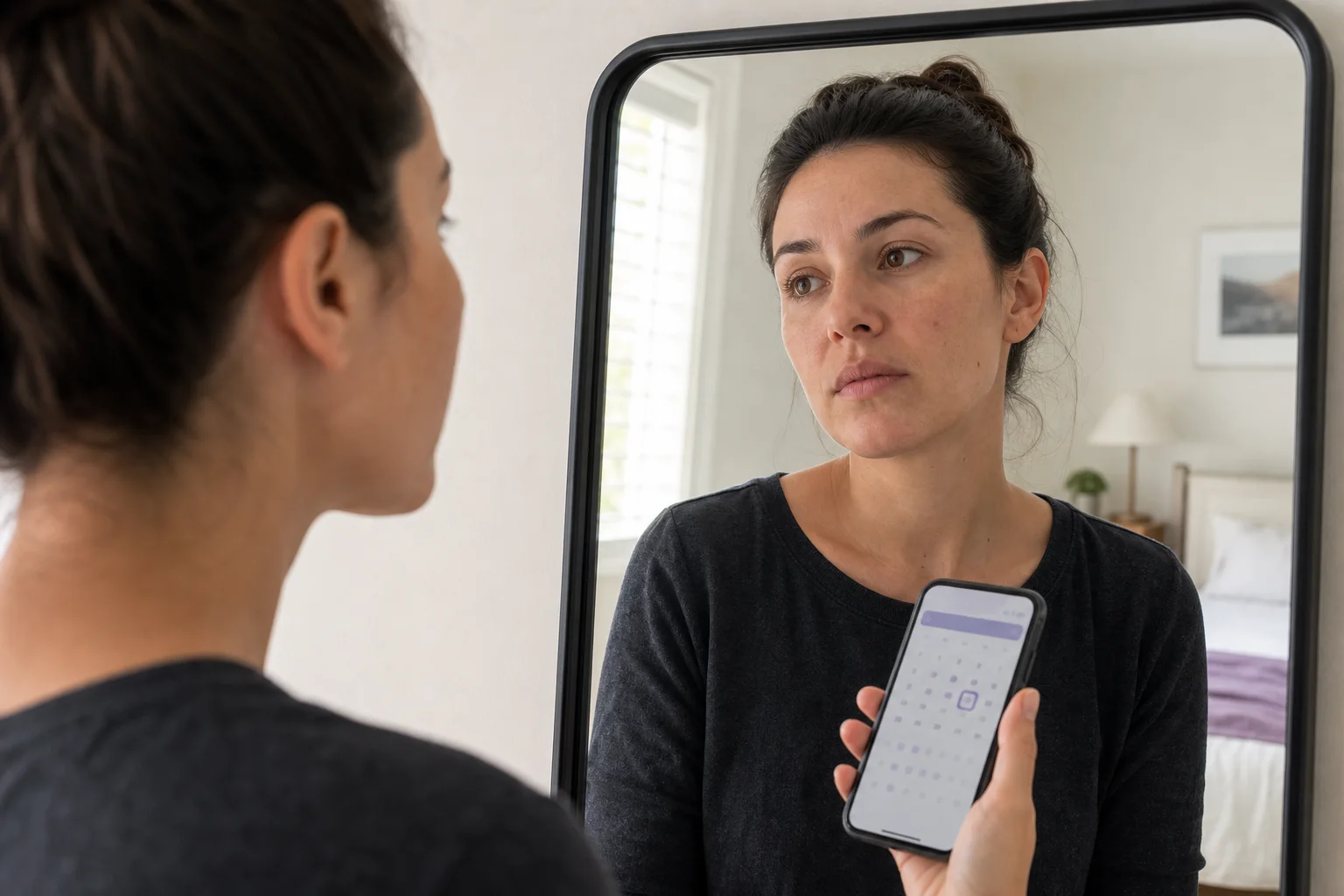
A useful rosacea routine is one you can follow comfortably alongside the treatment chosen for your symptoms. Start with basic care, make optional steps earn their place and ask for help when products hurt or symptoms change.
This guide separates daily skincare from decisions about medicines. It cannot diagnose rosacea or promise that a routine will stop every flare.
At a Glance
- Daily foundation: Gentle cleansing, moisturizer and sun protection.
- Medicine instructions: Follow the exact product and your prescriber’s plan.
- Optional extras: Add them for a clear purpose, not to reach a step count.
- Reaction notes: Record what changed instead of guessing that every reaction is barrier damage.
- Care sooner: Persistent, worsening or eye symptoms need attention; a home routine has no fixed healing deadline.
Start here: Rosacea & Redness Hub.
Is It Rosacea or Another Cause of Irritation?
Flushing, ongoing redness, visible vessels, acne-like bumps and stinging can occur with rosacea. Similar symptoms can occur with other conditions, and redness may be less obvious on darker skin. A clinician considers the pattern and history; a symptom list or photograph cannot confirm it. NHS rosacea guidance.
Before your appointment, note which symptoms happen without products and which appear after application. Include recent changes, current medicines and any prior diagnosis. Do not use “not itchy” or “only around the nose” as a diagnostic rule.
Seek urgent medical assessment for eye pain, blurred vision, light sensitivity, or red or gritty eyes with rosacea. Do not wait for a skincare reset to finish, and do not put facial rosacea medicine in your eyes.
Simplify Care During Irritation
If your routine has become hard to tolerate, stop adding optional scrubs, exfoliating products and new serums. Keep track of what you already use. “Simplify” does not mean stopping every prescribed medicine.
Follow medicine warnings and ask your prescriber about reactions, dose changes or restarting. Explain the severity, how long the symptoms last and whether they are worsening. There is no universal two-week reset that proves the cause has resolved.
A product can irritate despite being labelled gentle, natural or suitable for sensitive skin. Choose a formula you tolerate rather than a marketing promise. If an optional cosmetic causes a reaction, stop it; persistent or severe symptoms deserve advice. The AAD guide to testing skincare explains the limits of judging products by their labels.
Related: Barrier Care for Rosacea.
The Daily Foundation
Gentle cleansing
Use a cleanser that removes what you wear without repeated rubbing. Follow its directions, rinse as instructed and pat dry gently. Avoid scrubs and harsh friction. Ask for advice if washing itself repeatedly burns or stings.
Moisturizer
Choose a comfortable moisturizer and ask how it fits around prescribed products. There is no compulsory ingredient, percentage or number of layers. A second serum is optional, even if its ingredients also appear in a moisturizer.
Sun protection
Use a broad-spectrum SPF 30 or higher as directed, alongside shade, a hat and protective clothing. If sunscreen stings, ask about a tolerable formula. Zinc oxide or titanium dioxide products are options, but an ingredient category does not guarantee comfort. Do not reduce the labelled amount to preserve makeup or avoid white cast.
The AAD rosacea skin-care recommendations support these basics alongside medical treatment.
Morning and Evening Planning Cards
Use this as an editable outline. The exact order of a medicine comes from its instructions, not the card.
Morning
- Gentle cleansing according to your needs and product directions.
- Any morning medicine in the amount and order prescribed.
- A moisturizer that feels comfortable.
- Sunscreen according to its label before exposure, plus shade and clothing.
Evening
- Gentle removal of sunscreen and makeup.
- Any evening medicine according to its instructions.
- Moisturizer in the appropriate order.
- Optional extras only if they serve a purpose and are tolerated.
If products pill, review optional layers or the formula. Do not solve texture problems by reducing a medicine or sunscreen dose on your own. See Sunscreen Pilling: How to Stop It.
Where Rosacea Medicines Fit
The right treatment depends on the features present. The AAD treatment overview describes topical medicines, oral treatments and procedures for different concerns. A routine guide cannot rank one option as best for everyone.
| Question to discuss | Why it helps |
|---|---|
| Which symptom are we treating? | Bumps, flushing, lasting color and visible vessels are different goals. |
| What product have I been given? | Different forms and concentrations can have different instructions. |
| How does it fit with moisturizer? | Do not assume every medicine goes before or after it. |
| What if it irritates? | Agree on warning signs, contact and any changes. |
| When do we review? | Track benefit and tolerability without treating an internet deadline as a rule. |
Azelaic acid
Ask about the exact formulation and indication. Some medicines treat inflammatory rosacea bumps; that is not an automatic recommendation for isolated redness. Follow the product directions instead of a weekly escalation plan. Starting Azelaic Acid for Rosacea explains the questions to ask.
When metronidazole is not helping
Bring the product, how you have used it and which symptom remains. Do not increase the amount or add another medicine yourself. Metronidazole Not Working? What to Discuss Next covers a review and possible discussion topics.
Combining or switching
Ask whether the new product replaces something or accompanies it. There is no universal AM/PM combination or waiting period for every formulation. Azelaic Acid vs Metronidazole compares their boundaries.
Track Triggers Without Banning Everything
A diary can help you notice whether heat, sunlight, drinks, food, stress or a product coincides with symptoms. The AAD trigger-finding guide recommends recording exposures and symptoms over time. A pattern is a clue, not proof of causation.
Write down what happened and how it affected you. Avoid assuming every common trigger applies to you or deliberately provoking a reaction to prove a theory. Do not stop a prescribed medicine because you suspect it is a trigger; ask the prescriber.
Read Rosacea Flushing Triggers for a practical diary and ways to adapt daily activities.
Preparing for a Wedding or Another Event
Use the time before an event to reduce uncertainty, not to test a stronger treatment. If symptoms are active, discuss them with your clinician rather than setting a last-minute medicine schedule.
Before the event
- Check that you have enough of your usual products and any prescription.
- Practise the makeup and sunscreen combination you plan to use.
- Plan shade, comfortable temperatures and breaks where possible.
- Keep medicine changes with the prescriber, including on the night before.
On the day
Use familiar products that you tolerate. Apply makeup gently without rubbing away sunscreen, and plan how you will maintain sun protection. A color corrector can change appearance, but it does not treat the cause of redness.
If you feel overheated, move to a cooler setting and avoid adding several new products in response. Follow your care plan. Significant or worsening symptoms still deserve attention, even when the timing is inconvenient.
FAQ
Can I use a retinoid with rosacea?
Ask whether the exact product is appropriate for your diagnosis and goals. Do not start from a generic low-strength or once-weekly schedule. Follow pregnancy precautions and discuss breastfeeding and other medicines when relevant. Retinoids Guide.
Is niacinamide okay?
The ingredient name and concentration do not predict every person’s response. If a product stings or causes a rash, do not dismiss the reaction because niacinamide is usually described as gentle. Judge the whole formula and seek advice when needed. Niacinamide and Rosacea.
What if every sunscreen stings?
Seek help choosing a tolerable product and assessing the symptoms. Use shade and protective clothing to reduce exposure while you get advice. Do not assume that all chemical filters are unsuitable or that a mineral product cannot irritate.
Could it be seborrheic dermatitis?
It can resemble or coexist with other skin conditions. Flaking, itching and location are useful observations to share, not a diagnosis. Ask a clinician to assess persistent symptoms rather than combining treatment plans yourself.
Can an app tell me when to pause medicine?
No. Use the medicine warnings and professional advice. An app can record products, photographs and notes, but it cannot diagnose the cause or choose a treatment change.
Keep Your Routine Easy to Review
Use skncoach to organize your routine and visible changes. Keep the treatment instructions and questions you want to ask alongside your daily notes. Bring that record to the professional involved in your care.
General education, not a diagnosis or personal treatment plan. Follow your local product label and professional advice for your circumstances.