You’ve heard retinoids are the gold standard for anti-aging and acne—but every time you try, your face turns into a red, flaky mess. Sound familiar?
The sandwich method might be your answer. Here’s how to use it—and when to stop.
At a Glance
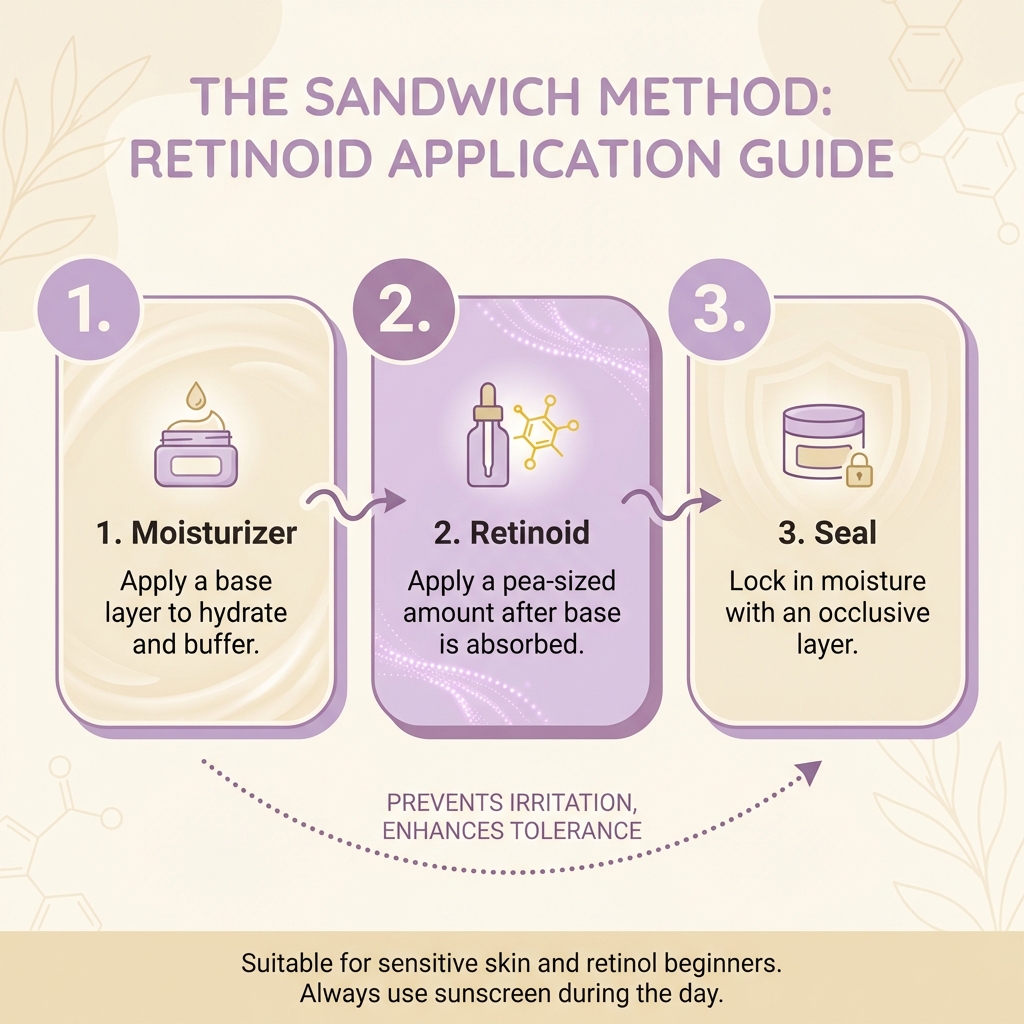
- What it is: Apply moisturizer → retinoid → moisturizer (or occlusive) to buffer irritation
- Who it’s for: Beginners, sensitive skin, anyone with retinoid irritation
- Key benefit: Reduces stinging and peeling without eliminating effectiveness
- When to phase out: After 4-8 weeks of consistent use with no irritation
This is part of our complete Retinoids Guide.
60-Second Self-Check: Do You Need Buffering?
YES, start with buffering if:
- ☐ You’ve never used a retinoid before
- ☐ Previous retinoid attempts caused irritation
- ☐ You have naturally sensitive or reactive skin
- ☐ You’re using tretinoin (prescription strength)
- ☐ Your skin is currently compromised (barrier issues, over-exfoliation)
You MIGHT skip buffering if:
- ☐ You’ve used retinoids for 3+ months with no issues
- ☐ You’re using a gentle OTC retinol (0.3% or lower)
- ☐ Your skin tolerates actives well historically
New to retinoids? Start with buffering. You can always phase it out later—but you can’t undo barrier damage.
How the Sandwich Method Works
The Science
Retinoids penetrate skin faster when applied to bare, slightly damp skin. This is great for effectiveness—but terrible for sensitive skin, because rapid absorption causes more irritation.
Adding a moisturizer layer first:
- Creates a buffer between your skin and the retinoid
- Slows absorption so less product hits at once
- Adds protective lipids that strengthen the barrier during treatment
Studies show buffering reduces irritation significantly while maintaining most of the retinoid’s effectiveness. You lose a bit of potency—but you can actually stick with the treatment.
The 3-Step Application
Step 1: Moisturizer Base
- Cleanse and let skin dry 5-10 minutes
- Apply a thin layer of moisturizer
- Wait 5-10 minutes for absorption
Step 2: Retinoid Layer
- Apply pea-sized amount of retinoid to entire face
- Avoid eyes, corners of mouth, and nostrils
- Spread evenly—don’t concentrate in one area
Step 3: Seal (Optional)
- Apply another thin layer of moisturizer or occlusive
- This “seals” the retinoid and adds extra barrier protection
- Especially helpful for very dry or sensitive skin
Pro tip: The first moisturizer layer is the essential buffer. The seal layer is optional—skip it if you find it too heavy or if products pill.
Starter Routine with Buffering
Retinoid Nights (2x/week to start)
| Step | Product | Wait Time |
|---|---|---|
| 1. Cleanse | Gentle, non-foaming cleanser | — |
| 2. Dry | Let skin air dry | 5-10 min |
| 3. Moisturizer | Buffer layer | 5-10 min |
| 4. Retinoid | Pea-sized, full face | — |
| 5. Seal (optional) | Thin moisturizer or occlusive | — |
Off-Nights & AM
| Step | Product | Notes |
|---|---|---|
| 1. Cleanse | Gentle cleanser | No actives |
| 2. Hydrating serum | Hyaluronic acid, niacinamide | Optional |
| 3. Moisturizer | Focus on hydration | Ceramides ideal |
| 4. SPF (AM only) | SPF 30+ | Non-negotiable |
Critical: Sunscreen every morning is non-negotiable when using retinoids. Your skin is more photosensitive—skipping SPF invites hyperpigmentation and undoes your progress.
When to Phase Out Buffering
Buffering is a tool to get you started—not a permanent necessity.
Signs You Can Reduce Buffering
After 4-8 weeks of consistent use (2-3x/week):
- No redness or stinging after application
- No significant peeling or flaking
- Skin tolerates the routine comfortably
How to Phase Out
Week 1-2: Skip the seal layer. Apply moisturizer → retinoid only.
Week 3-4: Apply retinoid first, then moisturizer on top (reverse order).
Week 5+: If tolerated, apply retinoid to bare skin, moisturize after.
Go slowly. If irritation returns at any phase, go back a step. There’s no rush—buffering indefinitely is fine if that’s what your skin needs.
Common Mistakes
1. Using Too Much Moisturizer
A heavy buffer layer can pill or make your retinoid slide around. Use a thin, absorbed layer—not a thick mask.
Fix: Less is more. Wait until the moisturizer fully absorbs before adding retinoid.
2. Not Waiting Between Layers
Rushing the steps defeats the purpose. The moisturizer needs time to form a protective layer.
Fix: Set a 5-minute timer. Scroll your phone. Don’t rush.
3. Mixing with Other Actives
Buffering doesn’t make it safe to add acids, vitamin C, or exfoliants on the same night.
Fix: Keep retinoid nights simple. Use other actives on off-nights—or in the morning.
4. Giving Up Too Soon
Buffering doesn’t eliminate all adjustment symptoms. Some dryness and mild flaking is normal.
Fix: Push through mild symptoms. Stop only if you have burning, stinging, or raw skin.
5. Buffering Forever at Low Frequency
If you’re still buffering + only using 2x/week after 3 months, you’re not building tolerance.
Fix: Gradually increase frequency or reduce buffering—but not both at once.
FAQ
Does buffering make retinoids less effective?
Slightly—but not enough to matter. Studies show buffered application is 80-90% as effective as direct application. And a retinoid you can actually use consistently beats one you quit after 2 weeks.
Can I use the sandwich method with tretinoin?
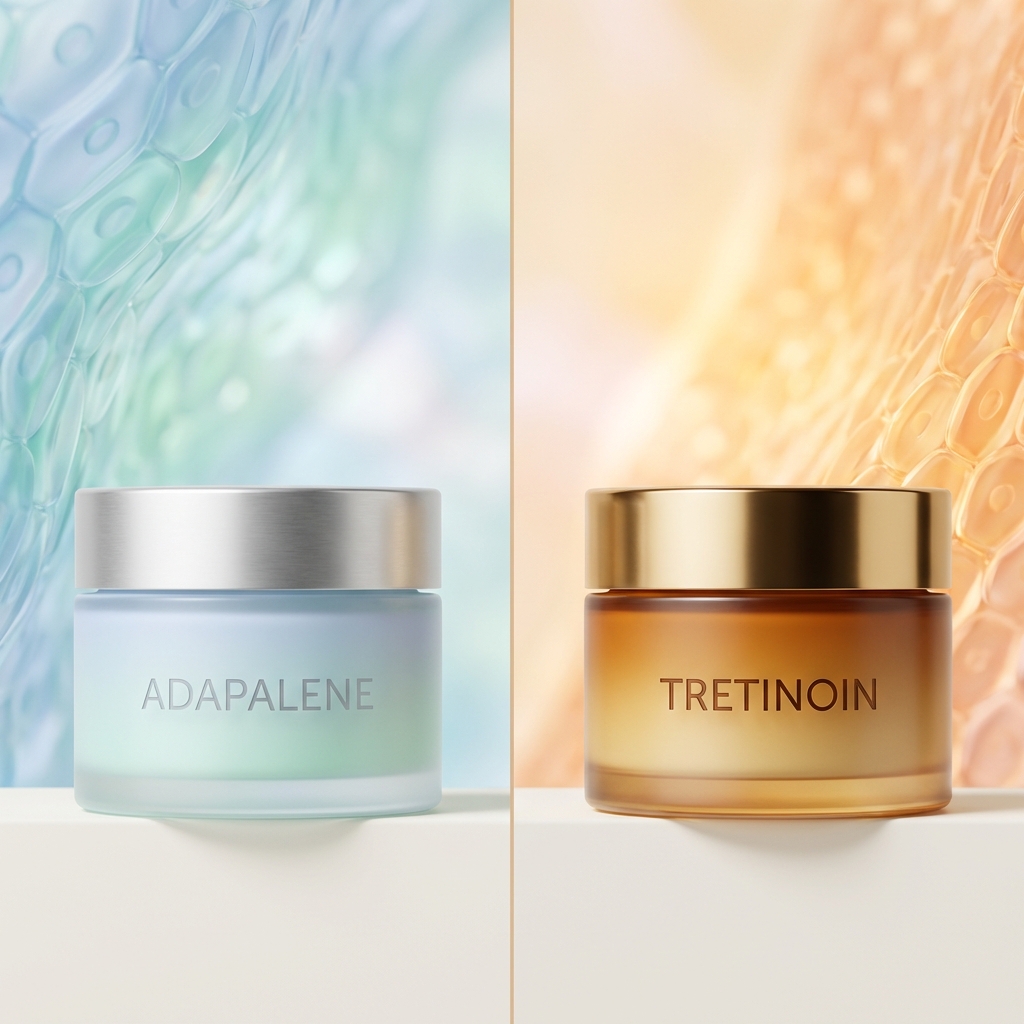
Yes—in fact, it’s especially recommended. Tretinoin is the strongest topical retinoid and causes the most irritation. Most dermatologists suggest starting tretinoin with buffering.
What moisturizer is best for buffering?
Any non-irritating moisturizer works. Avoid products with AHAs, BHAs, retinol, or fragrance. Look for:
- Ceramides, cholesterol, fatty acids (barrier support)
- Hyaluronic acid, glycerin (hydration)
- No “active” ingredients
Can I buffer adapalene too?
Yes, though adapalene is already gentler than tretinoin. If you’re very sensitive or brand new to retinoids, start with buffering. Otherwise, you may be able to apply adapalene directly.
What’s the difference between buffering and short-contact therapy?
- Buffering: Apply moisturizer first, then retinoid (stays on overnight)
- Short-contact: Apply retinoid to bare skin, wash off after 30 min
Both reduce irritation. Short-contact is more aggressive reduction; buffering is gentler. Try buffering first.
My skin still gets irritated even with buffering—what now?
Options:
- Reduce frequency (once/week)
- Use less product
- Switch to a gentler retinoid (retinol instead of tretinoin)
- Check if your barrier needs repair first
If nothing works, your skin may not tolerate retinoids right now. Repair your barrier for 2-4 weeks, then try again.
See: Retinoid Irritation & Barrier Repair
The Bottom Line
The sandwich method is a proven buffering technique that makes retinoid tolerance achievable for sensitive skin:
- Moisturizer first — creates a protective barrier layer
- Retinoid second — slowed absorption means less irritation
- Seal (optional) — extra protection for very sensitive skin
- Phase out gradually — as tolerance builds over 4-8 weeks
Don’t let fear of irritation stop you from using the most effective anti-aging and acne-clearing ingredient available. Buffer smart, build tolerance, and let your skin adjust at its own pace.
Ready for a personalized routine? Get the app and track your retinoid journey with daily skin condition logging.
What to Read Next
- Start here: Retinoids Guide
- Having irritation issues? Retinoid Irritation & Barrier Repair
- Prescription strength: Tretinoin: How to Start
- OTC option: Adapalene: How to Start
- Get your personalized routine: Scan your skin with skncoach
This content is for informational purposes only and does not replace professional medical advice. If you experience severe irritation or have concerns about retinoid use, consult a dermatologist.