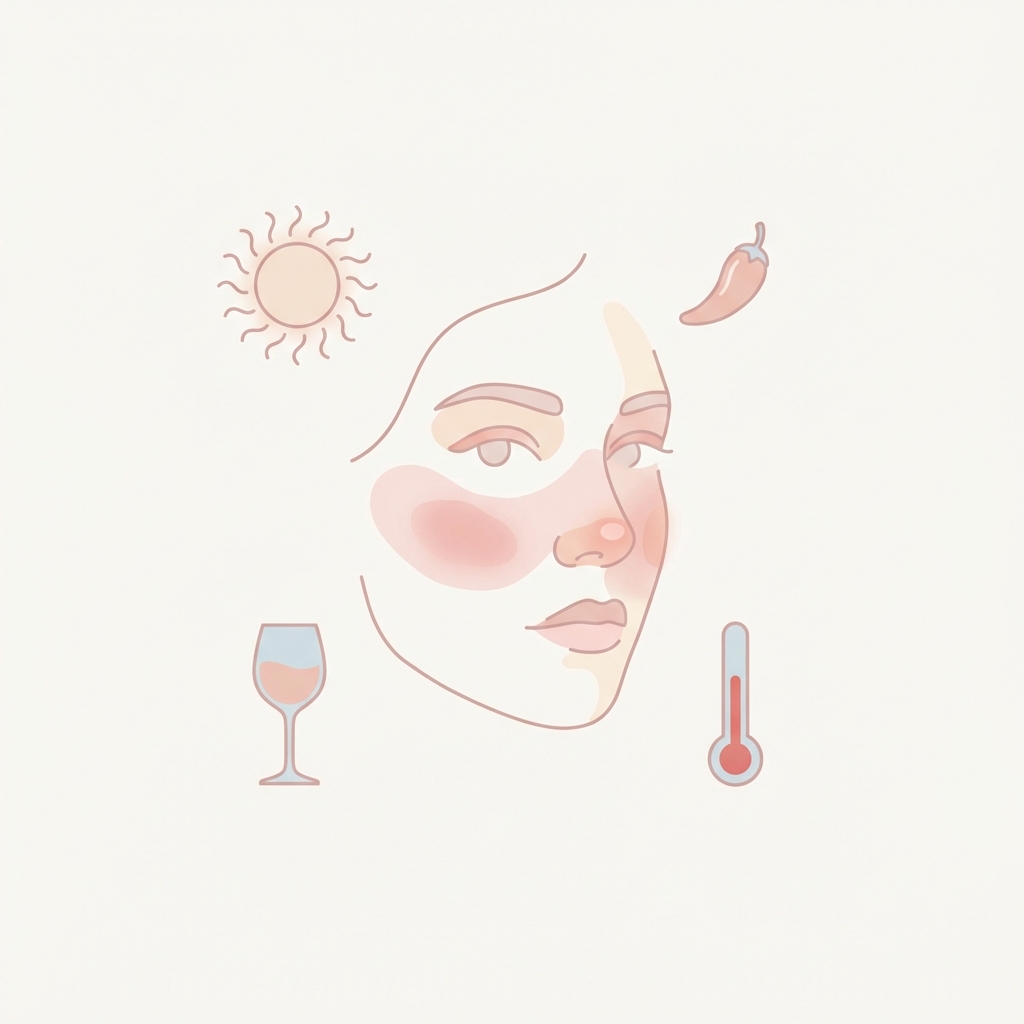
A hot room, a meal or a stressful conversation may seem to start a flush. That does not mean you need to avoid every food, activity or product on a rosacea checklist. A useful diary helps you describe what happens and choose manageable changes.
This guide is for recording possible patterns, not diagnosing rosacea or another cause of flushing. Patterns do not prove causation. Several exposures can happen together, and symptoms can change even when your routine does not.
At a Glance
- Personal patterns: A common trigger is not automatically your trigger.
- Keep life practical: Adapt heat exposure and exercise instead of abandoning activities.
- Record, then discuss: Note symptoms, products and context without testing a suspected allergy at home.
- Medicine boundary: Ask your prescriber about suspected medicine effects; do not change treatment from a diary alone.
- Care priority: Eye pain, blurred vision or light sensitivity need urgent medical advice.
Start here: Rosacea and Redness Guide
Why Flushing Needs Context
Rosacea can involve flushing, persistent redness, bumps and eye symptoms, but not everyone has the same features. Its causes are not fully understood. A warm or red face alone cannot tell you whether rosacea, ordinary blushing, a product reaction or another condition is responsible. The British Association of Dermatologists’ rosacea information explains the range of symptoms and treatment needs.
Describe your experience in your own words: warmth, burning, itching, visible colour change, bumps or discomfort. Redness may be less obvious on darker skin, so photographs should not be your only record. Note how you feel as well as what you see.
Common Situations to Notice
Heat, Cold and Wind
Think about the setting rather than declaring one universal cause: a hot shower, a heated car, cooking steam, sunshine or moving from cold outdoors into a warm room. If you notice a repeated pattern, choose an adjustment that fits your day.
Try comfortably warm water, a cooler room or a fan. Let very hot food and drinks cool. In cold or windy weather, choose a comfortable scarf that does not rub your face, and avoid directing a heater at your skin. These are comfort measures, not a guarantee against flushing.
Exercise
You do not have to give up exercise because your face flushes. You might prefer a cooler location or time of day, shorter sessions, a lower intensity or breaks to cool down. Adapt the activity to your general health and any advice from your clinician. The AAD’s trigger-management guidance includes ways to stay active while reducing overheating.
Record what exercise you did and the conditions around it. A warm gym and a cool outdoor walk are different experiences; the activity name alone may not explain your symptoms.
Food, Drinks and Alcohol
Spicy food, alcohol and very hot drinks are possible triggers for some people. A list is not a reason to remove entire food groups or assume every episode follows a particular ingredient. Note the food or drink, its temperature and the setting, then look for repeated patterns.
If alcohol seems to trigger symptoms, reducing or avoiding it is a reasonable option. Switching to a different alcoholic drink does not guarantee fewer symptoms or remove alcohol’s other risks. Do not try to build tolerance by deliberately provoking a reaction.
Seek a clinician or dietitian’s advice before a restrictive diet, especially if your food choices are already limited. A suspected food allergy needs appropriate medical advice, not a home elimination-and-challenge experiment.
Stress and Emotional Situations
A diary can include stressful events without turning every flush into a stress-management failure. You may find a quiet break, breathing exercise or support from someone you trust helpful. If fear of flushing affects work, relationships or daily life, ask a clinician about support, including talking therapies where appropriate. NHS advice on blushing covers seeking help when it affects your life.
Skincare and Makeup
Record the exact product and how it felt, including burning, itching or a rash. Fragrance-free products and a simple routine may be useful starting points, but an ingredient list cannot guarantee tolerance. Exfoliation, rubbing and layering several new products can make it harder to understand a reaction.
For a new optional cosmetic, introduce one change at a time. Small-area testing may help identify a reaction, but cannot rule out every problem or replace professional allergy testing. See AAD advice on testing skincare products. If a cosmetic causes a reaction, stop using it and seek advice if the reaction is significant or persists. Follow the label and contact your prescriber about reactions to prescribed treatment.
Sun Exposure
Use sun protection as part of everyday care: shade, protective clothing and a broad-spectrum, water-resistant SPF 30 or higher sunscreen, applied and reapplied according to its label. Choose a formula you can use comfortably. Mineral filters may suit some people, but no filter type guarantees that a whole product will feel comfortable.
Related: Sunscreen Choices for Rosacea
Medicines, Hormones and Other Changes
Record new medicines, dose changes or other health changes for a clinician to review. Do not stop a medicine, alter a prescription or start hormone treatment to test a theory about flushing. Your prescriber can help assess the timing, benefits and alternatives.
New or unexplained flushing deserves a clinical assessment if it persists, worsens or comes with other symptoms. A rosacea diary cannot distinguish every possible cause.
A Diary You Can Actually Keep
The AAD suggests recording possible triggers so you can discuss patterns. There is no single number of days that proves a trigger for everyone. Keep the record manageable enough to use without monitoring your skin constantly.
| What to record | A useful note |
|---|---|
| Episode | Approximate time, sensations, visible changes and how long they lasted |
| Setting | Weather, room temperature, exercise or a stressful event |
| Food and drink | What you had and whether it was very hot; avoid guessing the responsible ingredient |
| Products and treatment | Names, use according to instructions and any recent changes |
| What helped or hurt | Cooling, rubbing, a product or leaving the setting |
| Questions | What you want to ask a clinician at your next review |
An occasional photo in similar lighting can accompany notes if that feels useful. There is no need to capture every episode. Stop or simplify tracking if it makes you anxious or encourages repeated checking.
Turn Observations Into Small Changes
Choose one practical, low-risk adjustment, such as letting a hot drink cool or moving exercise to a cooler place. Record whether it helps. An improvement may be useful even if you cannot prove why it happened.
Avoid deliberately provoking a severe reaction, restricting many foods at once or changing prescribed treatment. If several things changed together, write that down rather than assigning the result to one product. Bring persistent patterns and questions to a clinician.
What May Feel Comfortable During a Flush
Move away from heat when possible. A fan, a cooler room or a cool damp cloth may feel comfortable; avoid extreme temperatures and direct ice on the skin. Do not scrub or pile on unfamiliar products to try to stop the episode.
These steps do not promise a shorter flush and do not treat an allergic emergency. If symptoms are severe, unusual or accompanied by warning signs, seek care instead of continuing a cooling experiment.
When to Seek Care
Arrange a clinical review for recurring unexplained flushing, worsening symptoms, new bumps or a routine that keeps hurting your skin. You do not need a completed diary before asking for help.
Seek urgent medical advice for eye pain, blurred vision or light sensitivity. Red, gritty or painful eyes in someone with rosacea also warrant prompt assessment. NHS rosacea guidance explains why eye involvement needs attention.
Seek emergency help for breathing difficulty, swelling of the lips, tongue or throat, or faintness with a suspected severe allergic reaction. Follow your existing allergy emergency plan if you have one and contact local emergency services. See NHS information on anaphylaxis. Do not deliberately repeat an exposure to find out whether it caused these symptoms.
Keep Daily Care Separate From Trigger Experiments
A simple foundation is gentle cleansing, moisturizer and sun protection, alongside prescribed treatment. A diary does not select a medicine or tell you when to increase, pause or combine it. You can discuss ongoing symptoms without first buying a new serum.
- Build a daily rosacea routine
- Read about azelaic acid and treatment instructions
- Record your routine in skncoach
skncoach can help you organize routine notes and progress photos for your own record. It cannot diagnose rosacea, identify an allergy or confirm what caused a flush.
This guide provides general information and does not replace individual medical advice.