Skincare Ingredients: Know Your Actives
An ingredient name is a starting point, not a promise. Explore niacinamide, vitamin C, acids and retinoids, then check the complete product, its directions and whether it fits your needs.
Find your path
Choose a topic to explore. This quiz cannot diagnose a condition or choose a medicine for you.
What's your primary skin concern?
Acne-Fighting Ingredients
Acne products can contain ingredients such as salicylic acid, benzoyl peroxide or adapalene, but their purposes and directions differ. A pharmacist or clinician can help you choose an appropriate treatment. Seek care for painful, scarring or persistent acne instead of adding more actives.
Read: How to Start AdapaleneCalming Ingredients
Redness and sensitivity have several possible causes. Keep care gentle and seek advice for persistent symptoms. Azelaic acid can irritate, and a medicine approved for rosacea bumps is not automatically appropriate for redness alone. Read the product-specific guide before discussing options with a clinician.
Read: Azelaic Acid for RosaceaAnti-Aging Ingredients
Start with sun protection and a moisturizer you tolerate. Some retinoid products can help specific signs of sun damage, but results and irritation depend on the product. Extra serums are optional. Do not use retinoids during pregnancy; discuss breastfeeding and any medicine choice with your clinician.
Read: Retinoids GuideBrightening Ingredients
Dark marks can have different causes, so treatment starts with understanding the change. Broad-spectrum SPF 30 or higher, shade and protective clothing support care. Do not assume that a brightening ingredient suits every mark; have new or changing spots assessed.
Read: Pigmentation GuideAll Guides & Resources
Explore ingredient guides by category.
Acids & Exfoliants
Antioxidants & Brighteners
Acne Fighters
Ingredient Myths & Claims
Cheat Sheets & Downloads
Free infographics to save, print, or share
Starter routine
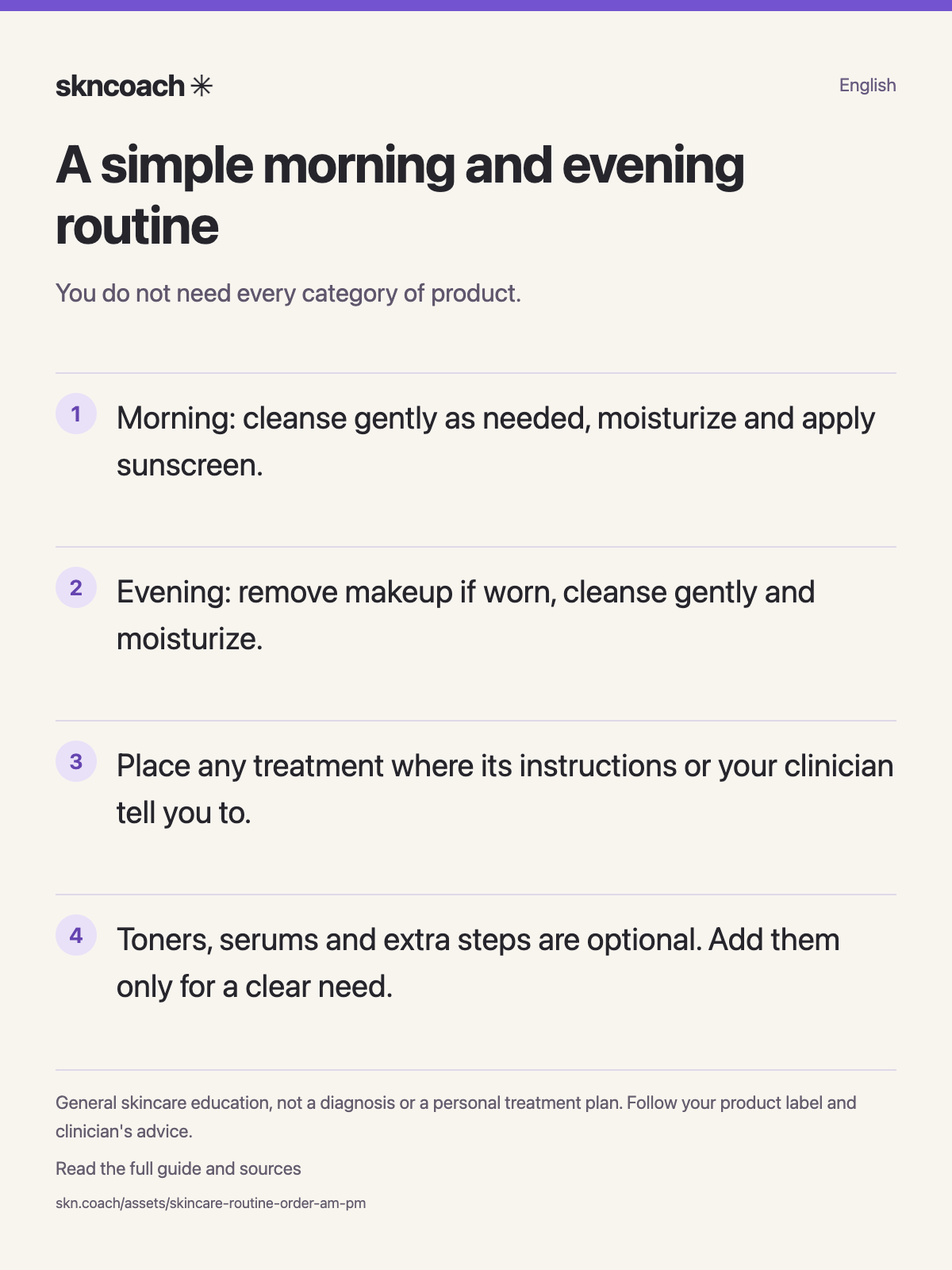
Keep the basics simple. Optional products should have a clear purpose; prescribed treatment follows your prescriber’s directions.
AM Routine
- 1Cleanse — gentle, non-stripping
- 2Optional serum — use only if it suits your needs and label directions
- 3Moisturizer — lightweight, hydrating
- 4Sunscreen SPF 30+ — broad-spectrum; apply and reapply as directed
PM Routine
- 1Cleanse — gently remove makeup and sunscreen; a second cleanser is optional
- 2Treatment, if needed — follow its label and your prescriber’s directions
- 3Optional serum — skip it if it adds irritation or no useful benefit
- 4Moisturizer — choose one your skin tolerates
What not to do
Avoid unnecessary layers and assumptions about what an ingredient can do.
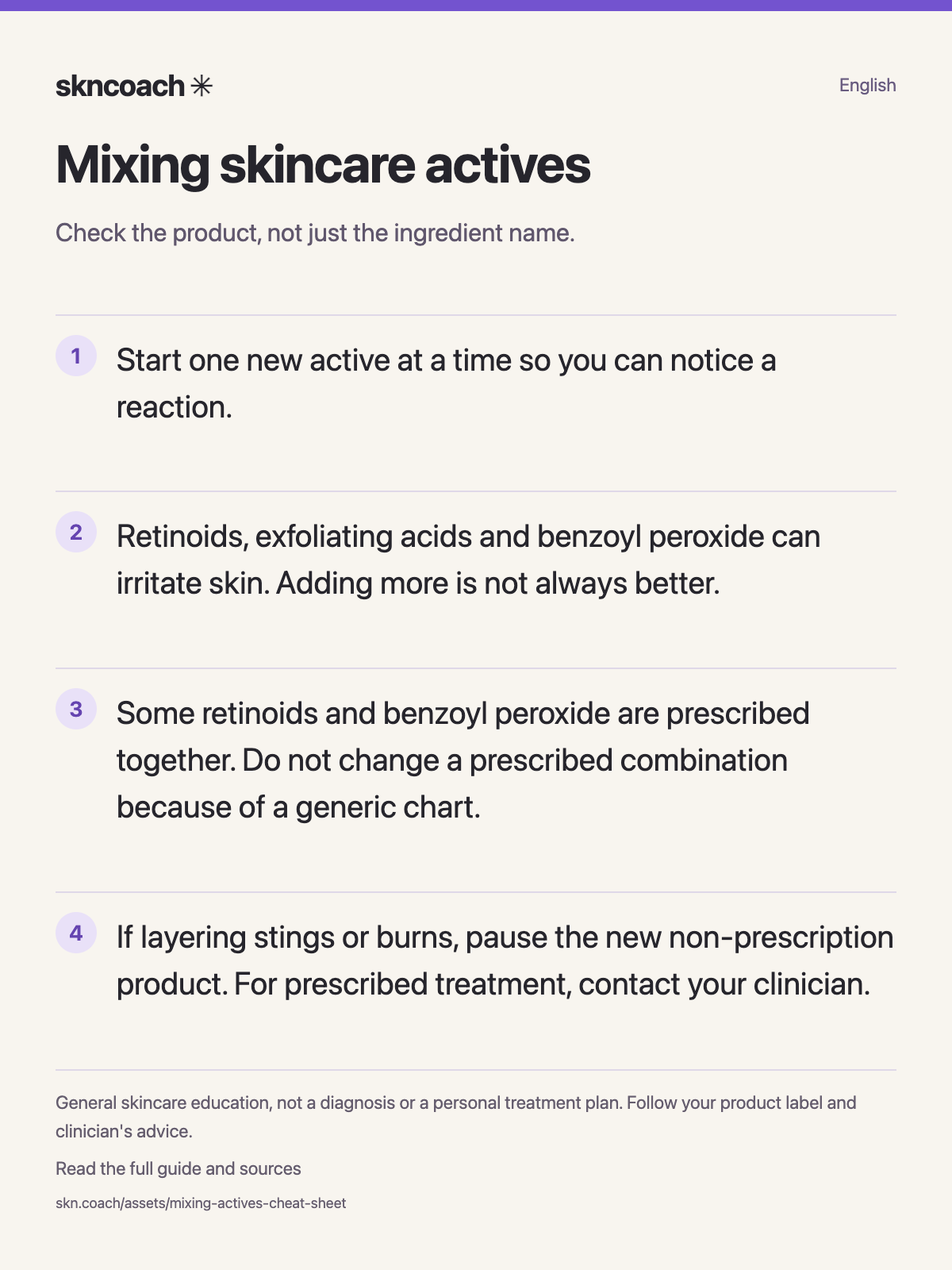
Adding exfoliation to an irritating routine. Retinoids and exfoliating acids can both irritate. Do not add an exfoliant to sore skin or improvise a schedule around a prescribed medicine.
Treating a mixing chart as a product label. Stability, strength and tolerance depend on the formulation. Ask a pharmacist about the exact products instead of changing a medicine schedule to fit a serum.
Introducing several new products together. Changing one optional product at a time makes a reaction easier to trace. There is no universal waiting interval that guarantees tolerance.
Pushing through pain or a rash. Stop an optional cosmetic that irritates. For a prescribed medicine, follow its reaction instructions and contact your prescriber rather than setting your own restart plan.
Relying on a serum for sun protection. It does not replace sunscreen, shade or protective clothing. Check medicine labels for any additional sun precautions.
Adding steps just to fill a routine. Cleansing, moisturizing and sun protection are useful basics. The right number of additional products depends on your needs, not a target count.
When to see a dermatologist
Some situations need professional guidance.
- You're experiencing persistent irritation or allergic reactions to products
- Your treatment is not helping, is worsening symptoms or is difficult to tolerate
- You have painful or scarring acne, persistent redness, or new or changing dark spots
- You want prescription-strength retinoids (tretinoin, tazarotene)
- You're unsure if a reaction is purging, irritation, or allergy
- You are pregnant, planning pregnancy or breastfeeding and need advice about specific products
Common questions
Quick answers to ingredient questions.
Can I use niacinamide and vitamin C together?
How do I know if I'm purging or breaking out?
What order should I apply skincare actives?
Which ingredients should never be mixed?
Can I use vitamin C and retinol in the same routine?
Is "hypoallergenic" on a label regulated?
Does collagen in a face cream rebuild my skin's collagen?
Sources and product-specific guidance
Read the AAD guide to applying skincare, exfoliation precautions, retinoid overview and FDA explanation of hypoallergenic claims. Product labels and individual clinical advice take priority over this general guide.
Organize your skincare routine
Use skncoach to organize routine suggestions and record visible changes. A photo cannot diagnose a condition, choose a medicine or guarantee that an ingredient will suit your skin.