Sunscreen & Sun Protection
Sunscreen is the most important anti-aging product you own—but finding one that doesn't pill, leave a white cast, or feel terrible is the hard part. This guide helps you choose the right SPF, apply it correctly, and make it actually work.
Find your path
Answer a quick question to find the right guide for your situation.
What's your main sunscreen challenge?
The Two-Layer Method
Pilling is usually a technique problem, not a product problem. Learn the two-layer method: apply half, wait 30 seconds, apply the rest. Pat instead of rubbing. This fixes most pilling issues.
Read: Fix Sunscreen PillingTinted or Hybrid Formulas
White cast comes from mineral filters (zinc, titanium). Solutions: try tinted mineral SPF, hybrid formulas that combine mineral + chemical, or purely chemical filters if tolerated. Thinner layers also help.
Get personalized recommendationsStart With the Basics
Mineral sunscreens sit on skin and are gentler; chemical sunscreens absorb in and feel more elegant. SPF 30 is fine for daily indoor life; SPF 50 for extended outdoor time. Start with what you'll actually wear.
Get your personalized routineMineral SPF for Sensitive Skin
If sunscreen stings, your barrier might be compromised. Try mineral-only SPF (zinc oxide). Apply after moisturizer to buffer. Avoid fragrance and alcohol denat. If you have rosacea, we have a specific guide.
Read: Sunscreen for Sensitive SkinAll Guides & Resources
Everything you need to master sun protection.
Application & Technique
Choosing Your SPF
Sensitive Skin & Conditions
Cheat Sheets & Downloads
Free infographics to save, print, or share
Starter routine
How to incorporate sunscreen into a simple daily routine.
AM Routine
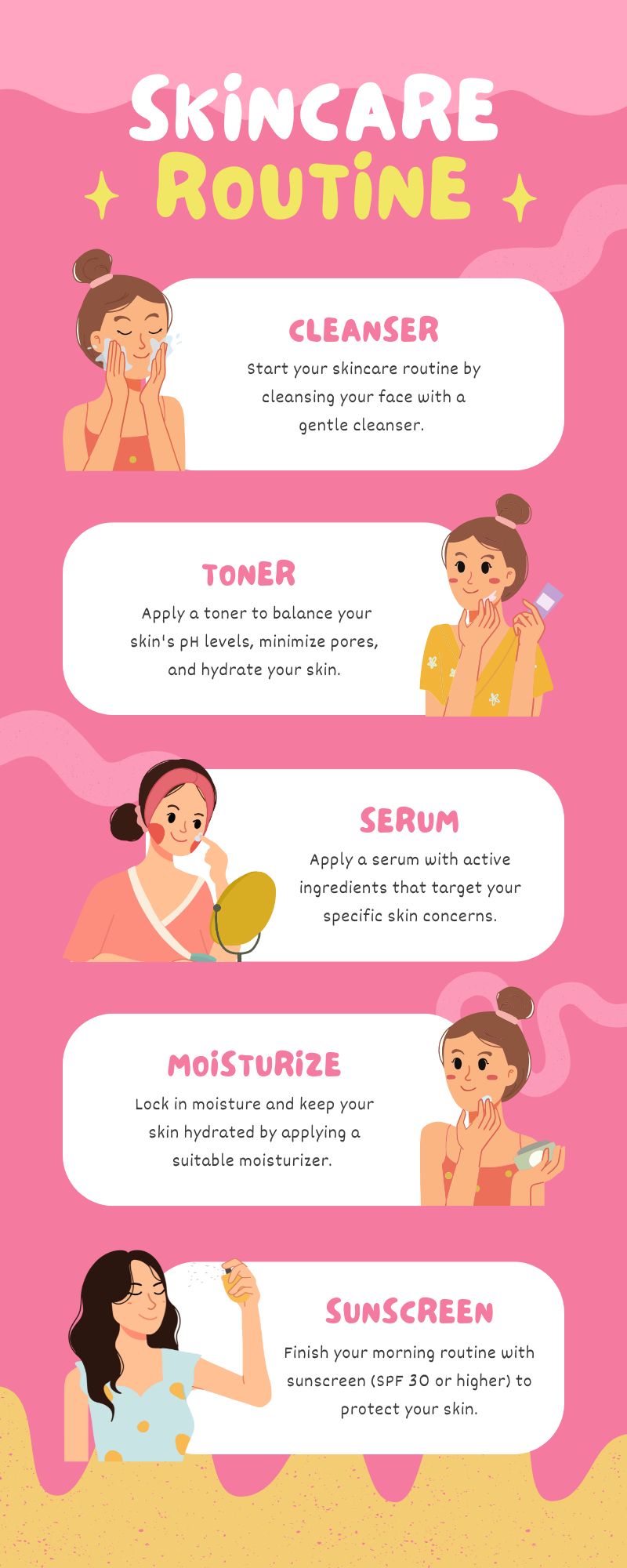
- 1 Cleanse — gentle cleanser or water rinse
- 2 Moisturizer — let it absorb 1-2 minutes
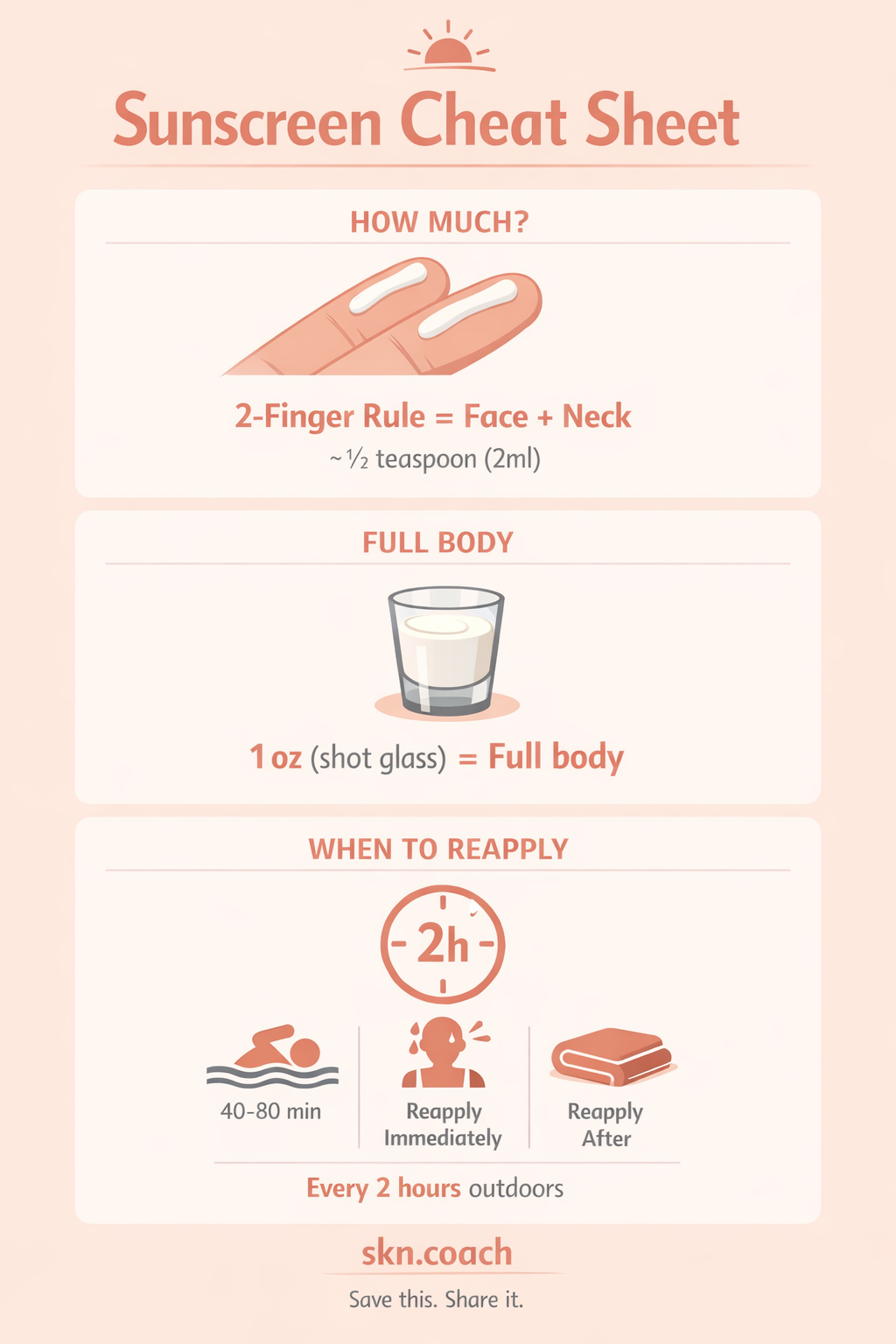
- 3 Sunscreen — two finger-lengths, pat gently
- 4 Wait 2-3 min — before makeup or going outside
Reapplication
- 1 Every 2 hours — of direct sun exposure
- 2 After sweating — or water contact
- 3 Over makeup — SPF powder or setting spray
- 4 Indoor days — morning application usually enough
Ingredient Cheat Sheet
What different filters do and who they're for.
✓ Zinc Oxide
Broad spectrum, anti-inflammatory. Best for sensitive/rosacea skin. May leave white cast.
✓ Titanium Dioxide
Excellent UVB protection. Often paired with zinc. Gentler than chemical filters.
✓ Iron Oxides (tinted)
Block visible light + blue light. Reduce white cast. Good for melasma/PIH.
⚠ Avobenzone
Good UVA protection but can be irritating. Needs stabilizers. Check tolerance.
⚠ Octinoxate
Common chemical filter. Can irritate sensitive skin. Avoid if reactive.
✗ Oxybenzone
High irritation potential. Hormone concerns. Many people avoid now.
✗ Alcohol Denat (high)
Dries and irritates. Avoid if in top 5 ingredients (small amounts OK).
✗ Fragrance in SPF
Unnecessary irritant. Choose fragrance-free for facial sunscreen.
What not to do
These mistakes reduce protection or cause problems.
Skipping SPF because it's cloudy. 80% of UV penetrates clouds. Your anti-aging and protection benefits require daily use.
Using too little. Most people apply 25-50% of what's needed. Two finger-lengths for face and neck is the standard.
Rubbing instead of patting. Vigorous rubbing causes pilling and moves product around. Spread then pat gently.
Expired sunscreen. Check the date. SPF loses effectiveness over time. Replace yearly if opened.
Relying on SPF in makeup. The amount you apply for coverage ≠ the amount for SPF protection. Wear actual sunscreen underneath.
Skipping neck and ears. These areas get sun exposure too. Your routine should include them.
When to see a dermatologist
Some situations need professional evaluation.
- You notice new or changing moles, spots, or growths
- You have significant sun damage history and want a skin check
- Sunscreen consistently causes reactions despite trying gentle formulas
- You have melasma or persistent hyperpigmentation
- You're on photosensitizing medications and need guidance
- You're planning a procedure and need pre/post sun protection advice
Common questions
Quick answers to the most-asked sunscreen questions.
How much sunscreen should I apply to my face?
What's the difference between mineral and chemical sunscreen?
Why does my sunscreen pill or ball up?
Is SPF 30 enough or do I need SPF 50?
100% Independent. Always.
We never monetize through brand deals, affiliate links, or ads — so you can trust our recommendations.
Get your personalized routine
A skin scan helps you understand your skin and get a routine with the right SPF for your concerns.