Your sunscreen rolls into little flakes, leaves a white cast or makes skin texture more noticeable. That can make an otherwise simple morning routine frustrating.
The cause can be the formula, the products underneath or how the layers are applied. You do not need to blame your skin or force a product to work. The aim is comfortable, even coverage at the amount directed on the label.
At a Glance
- Keep the amount: Do not reduce the amount of sunscreen to hide pilling or white cast.
- Simplify optional layers: Try fewer products underneath while keeping prescribed treatment instructions in mind.
- Apply as directed: Spread evenly and let the formula settle before disturbing it with makeup.
- Check the result: Visible flakes cannot measure the SPF left on your skin. Re-establish coverage if the layer has rolled or rubbed away.
- Change the formula if needed: No application trick makes every product suitable for every person.
This is part of our guide to Skin Texture & Visible Pores.
Before changing your layers, read how much sunscreen to apply and when to reapply. Finger-lengths are a visual cue, not a guaranteed dose for every product or area.
Why Sunscreen Pills
Pilling is the visible rolling or flaking of product during application or later rubbing. It can involve sunscreen, another product underneath or the combination. Looking at the flakes does not tell you which ingredient caused it or how much protection remains.
Possible contributors to check
Several optional layers: A serum, moisturizer, primer and sunscreen may be difficult to spread smoothly together. Testing a simpler combination can help you identify a problem.
Repeated rubbing: Continuing to massage or work makeup over a layer can disturb its surface. Spread the sunscreen as instructed, then avoid unnecessary rubbing.
An unsettled layer underneath: If an earlier product is still moving around, pause before adding another. There is no single waiting time that works for every formula.
A product combination that does not suit you: You cannot reliably predict compatibility from one ingredient or a rule about matching water, oil or silicone bases. The complete formulations matter.
The sunscreen itself: If the same issue happens with a simple routine and correct application, a different sunscreen may be more practical.
A Simple Troubleshooting Sequence
Step 1: Read the product label
Check the application amount, when to apply before sun exposure, water-resistance instructions and reapplication directions. This troubleshooting guide does not replace them. The AAD generally advises applying sunscreen before going outdoors and reapplying during exposure; use the product’s directions for your situation.
Step 2: Remove optional complexity
On a day when you can test comfortably, leave out an optional serum or primer. Keep the moisturizer you need for comfort. Do not change a prescribed medicine merely to make makeup sit better; ask how to fit sunscreen around it.
Step 3: Apply an even, adequate layer
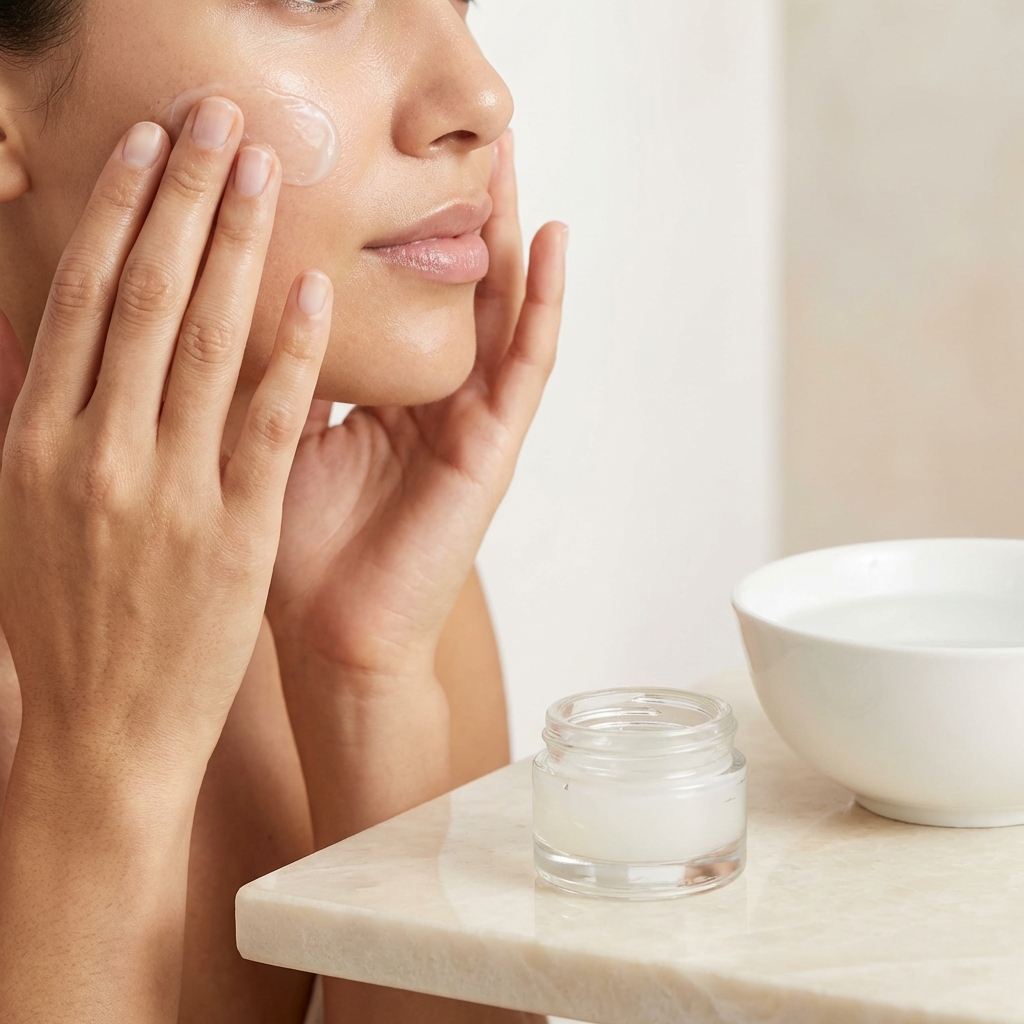
Use the label-directed amount and cover all intended exposed areas, including edges that are easy to miss. Spread gently and evenly. Do not dilute sunscreen by mixing it with moisturizer or foundation.
Some people find working in smaller sections easier. That is an application preference, not evidence that a particular number of layers gives better protection. The total amount and complete coverage still matter.
Step 4: Let it settle before makeup
Follow any waiting instructions supplied with the sunscreen or makeup. If you see rolling, avoid repeatedly rubbing the area in an attempt to smooth it. Try simplifying the combination or changing the product that seems to trigger the problem.
Step 5: Restore disturbed coverage
If sunscreen has visibly rolled or rubbed away, do not assume the remaining film provides its labeled protection. Reapply according to the directions. If you need to remove the unstable combination and start again, use gentle cleansing and reapply before further exposure. Shade and protective clothing help while you sort it out.
Change one thing at a time: Note the sunscreen, products underneath and what happened. A shorter routine can make troubleshooting clearer; it does not prove that a particular ingredient is unsuitable for everyone.
Fixing Common Texture Issues
Problem: White Cast
Some formulas leave a pale or gray appearance, especially on deeper skin tones. The finish depends on the whole product, including its filters, pigments and texture.
Try a tint that matches your skin or a different broad-spectrum formula you tolerate. Evaluate it at the amount you actually need. A product that looks clear only when you use too little is not a useful fit.
Problem: A Shiny Finish That Emphasizes Texture
A glossy surface can make normal skin texture more noticeable. That does not mean the sunscreen has damaged your pores.
A matte or dry-touch finish may suit your preference. Let sunscreen settle before applying makeup, and avoid rubbing off its layer. If you use cosmetic powder, treat it as makeup; it does not replace the sunscreen amount or reapplication instructions.
Problem: A Greasy or Heavy Feel
A richer formula can feel uncomfortable on some skin. Consider a lighter lotion or fluid, or reduce an optional rich layer underneath if your skin remains comfortable.
Do not wipe or blot freshly applied sunscreen away to remove shine. If you need to remove product, restore sunscreen coverage afterward. Feeling less greasy is not a reliable measure of UV protection.
Problem: Stinging, Itching or a Rash
Do not treat a reaction as a texture problem to work through. Stop a product that causes irritation and seek advice if symptoms persist or are severe. A dermatologist can help identify a suitable option and assess a suspected allergy.
Use shade and protective clothing while finding a product you tolerate. A fragrance-free or mineral formula may be worth discussing, but neither label guarantees that a product cannot cause a reaction.
Product-Agnostic Application Tips
- Follow the complete formula’s directions. A single ingredient name cannot tell you the right amount, timing or compatibility.
- Keep the sunscreen separate. Avoid mixing it into another product to change the finish.
- Cover the edges. Hairlines, ears and the sides of the face can be missed when attention stays on the center.
- Avoid unnecessary friction. Towels, clothing, rubbing and makeup application can disturb coverage.
- Keep reapplication practical. Carry the sunscreen when you will be outdoors and follow its directions after swimming, sweating or towel drying.
- Check storage. Follow the label and avoid leaving sunscreen in excessive heat.
When to Switch Sunscreens
Trying another formula is reasonable when the current one repeatedly pills with a simple routine, feels unpleasant at the required amount or causes a reaction. You do not have to keep experimenting with a product that is uncomfortable.
| Preference or concern | What to consider |
|---|---|
| Greasy finish | A lighter fluid, lotion or dry-touch finish |
| Dryness | A comfortable moisturizing formula |
| Visible white cast | A suitable tint or another finish tested at the full amount |
| Sensitive or reactive skin | Professional advice and a fragrance-free option you tolerate |
| Makeup compatibility | A simpler combination that stays even during application |
These are starting points for choosing a texture, not promises about an entire product category. Keep broad-spectrum protection and the label instructions central to the choice.
FAQ
How much sunscreen should I actually apply?
Use your product as directed and cover all exposed skin. Finger-lengths are a visual cue, not a guaranteed dose. Our amount and reapplication guide explains current AAD guidance and why the covered area matters.
Can sunscreen cause breakouts?
A particular formula may not suit your skin. A non-comedogenic label can help guide a choice, but it is not a guarantee. Track the timing of new products and seek advice for persistent acne or a rash rather than assuming every new bump is a clogged pore.
Do I need sunscreen indoors?
Your exposure depends on time near windows and outdoor activity; some UVA can pass through glass. Follow any condition-specific advice from your clinician. A change in indoor routine does not remove the need for appropriate protection when you go outdoors.
My sunscreen looks fine at first, then pills when I apply makeup
Try fewer optional layers, allow the sunscreen to settle and use less friction during makeup application. Follow product instructions instead of relying on a universal three-minute rule. If coverage rolls away, restore it rather than covering the flakes with more makeup.
Does sunscreen expire?
Yes. Follow the expiration date, storage directions and any period-after-opening instruction on your product. US guidance says that sunscreen without an expiration date should be discarded three years after purchase. Do not replace that guidance with a universal yearly rule, or assume it overrides a shorter date on the label. Replace a product if its texture, color or smell changes unexpectedly.
Can I fix pilling by using less sunscreen?
No. Keep the directed amount and change optional layers, application or the formula instead. A smooth finish obtained by underapplying does not establish adequate protection.
Your Next Step
Start with the label-directed amount and a simpler combination of products. If the sunscreen still rolls away or feels wrong, choose another formula you can use comfortably and consistently.
Build a simple routine to organize the steps. The tool cannot measure sunscreen coverage or verify the protection left after pilling.
Sources
- American Academy of Dermatology: Applying sunscreen
- American Academy of Dermatology: Sunscreen FAQs, including expiration and storage
- American Academy of Dermatology: Selecting sunscreen
- American Academy of Dermatology: Testing skincare products
General skincare education. This page cannot diagnose a reaction or measure sun protection. Follow the product label and seek professional advice for persistent or severe symptoms.