You’ve tried topical retinoids. Maybe you’ve done a few microneedling sessions. Your acne scars have improved—but they’re still there, still catching shadows, still visible in photos. Fractional laser keeps coming up in your research as the “gold standard” option. But what does that actually mean, and is it right for you?
This guide breaks down fractional laser treatments for acne scars: how they work, what types exist, realistic expectations, recovery, and how to find the right provider.
At a Glance
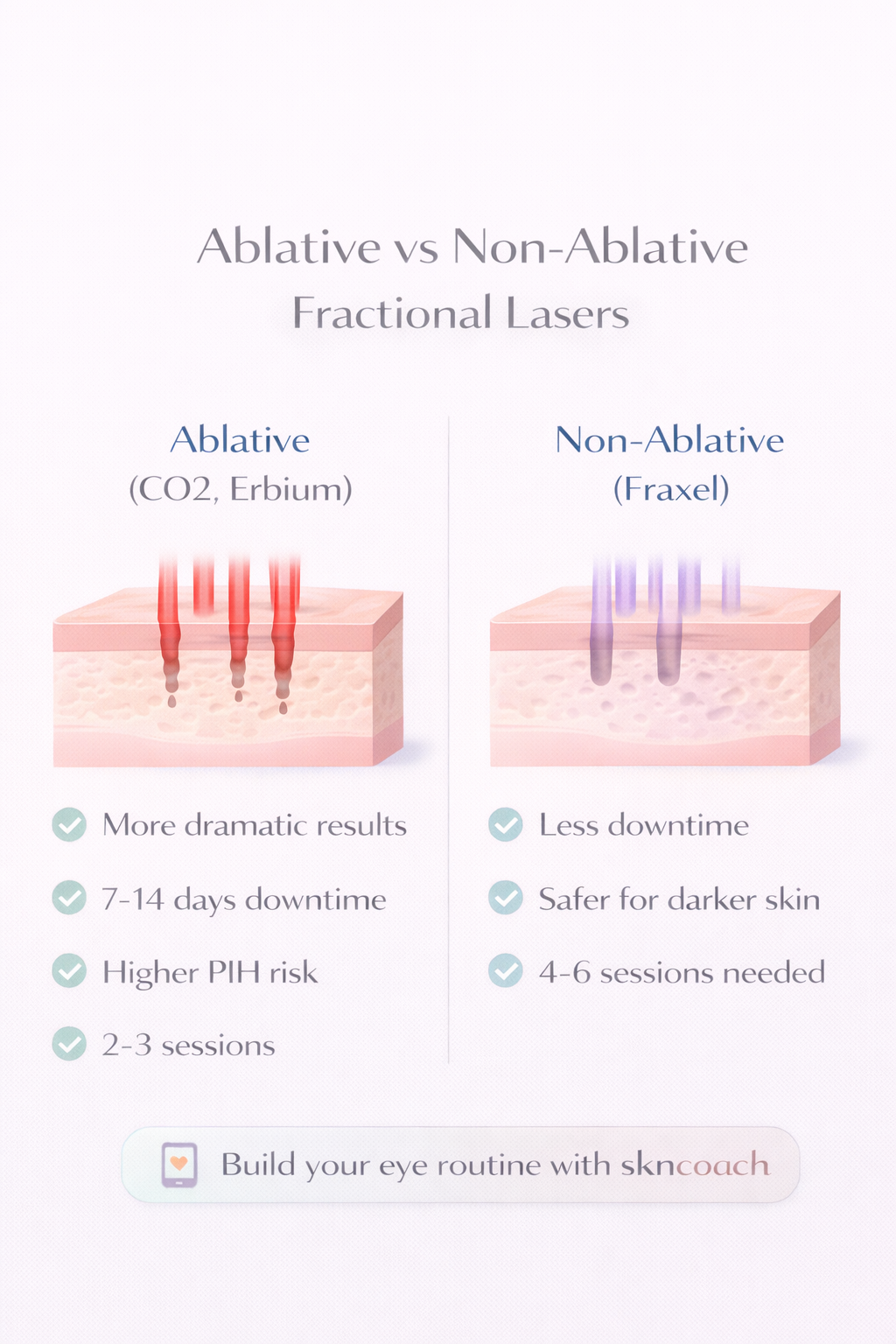
- Two types: Ablative (CO2, Erbium) vs Non-ablative (Fraxel, Clear+Brilliant)
- Ablative: More dramatic results, 7-14 days downtime, higher PIH risk
- Non-ablative: Less downtime, safer for darker skin, more sessions needed
- Expected improvement: 30-70% over full treatment course
- Best for: Rolling/boxcar scars; icepick scars need TCA CROSS first
How Fractional Lasers Work
Traditional ablative lasers (like old-school CO2) remove the entire skin surface. Effective, but with intense downtime and significant risks—especially for darker skin tones.
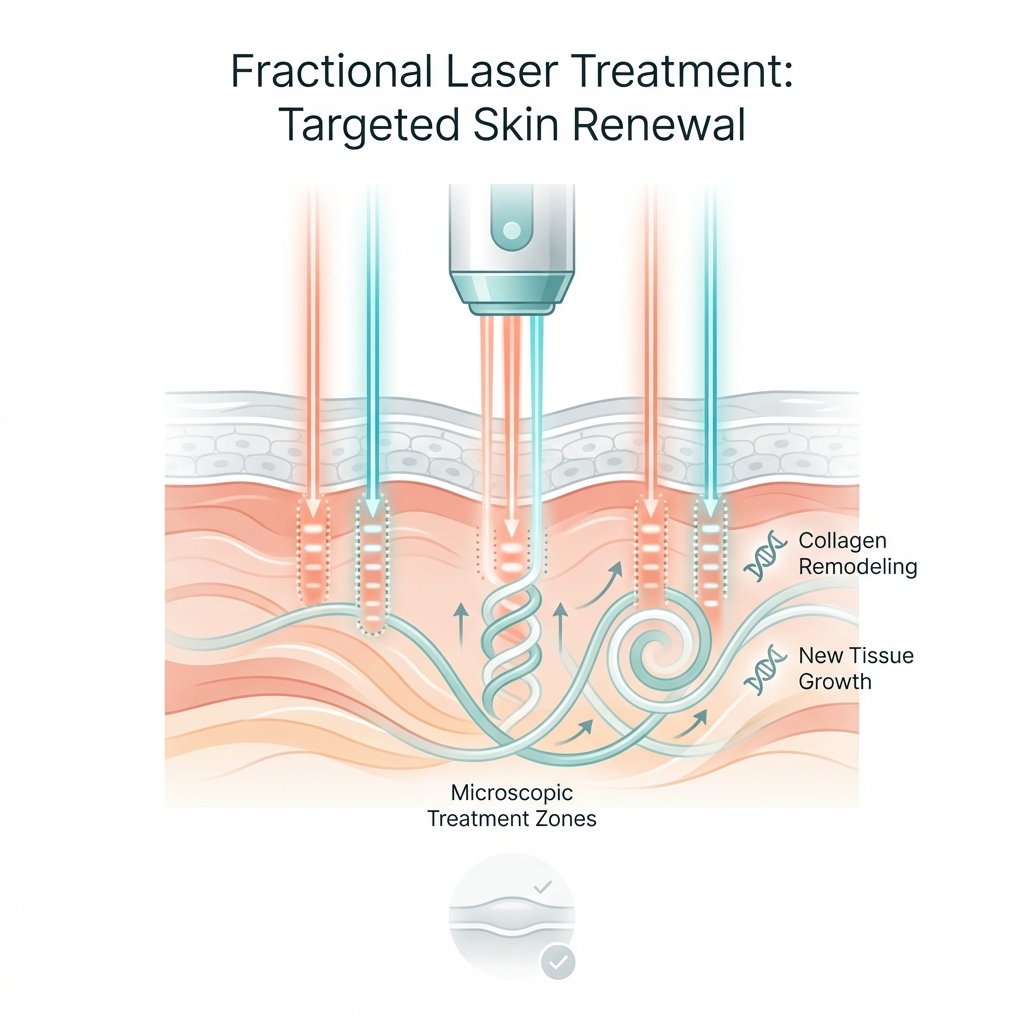
Fractional lasers changed the game. Instead of treating 100% of the surface, they treat a fraction of the skin—creating thousands of microscopic treatment zones while leaving surrounding tissue intact.
Why “Fractional” Matters
- Microscopic columns: The laser creates tiny vertical channels in the skin, penetrating into the dermis where scars live
- Healthy tissue bridges: Untreated skin between the channels speeds healing and reduces complications
- Collagen remodeling: The controlled injury triggers your body’s wound-healing response—new collagen fills in and remodels over months
- Cumulative results: Multiple sessions build on each other
Think of it like aerating a lawn. You’re not ripping up the whole surface—you’re creating strategic holes that allow new growth to fill in.
Ablative vs Non-Ablative: The Key Difference
All fractional lasers fall into two categories:
Ablative Fractional Lasers
Examples: Fractional CO2, Fractional Erbium
How they work: These lasers vaporize the skin within those microscopic columns. They physically remove tissue.
Pros:
- More dramatic results per session
- Reaches deeper into the dermis
- Best for significant acne scarring
- Fewer total sessions needed (often 2-3)
Cons:
- Significant downtime (7-14 days of visible healing)
- Higher risk of hyperpigmentation, especially in darker skin
- More discomfort during procedure
- Higher infection risk during healing
- More expensive per session
Best for: Fitzpatrick skin types I-III, deeper rolling/boxcar scars, patients willing to accept longer recovery for faster results.
Non-Ablative Fractional Lasers
Examples: Fraxel Restore (1550nm), Clear + Brilliant, some picosecond fractional modes
How they work: These lasers create thermal damage without vaporizing the surface. The skin surface stays intact while the dermis is heated and stimulated.
Pros:
- Much less downtime (often just redness/swelling for 2-5 days)
- Lower risk of post-inflammatory hyperpigmentation
- Safer for darker skin tones (Fitzpatrick IV-VI)
- Can sometimes be combined with other treatments
Cons:
- More sessions needed (often 4-6+)
- Less dramatic improvement per session
- May not adequately treat deeper scars
Best for: Fitzpatrick skin types III-VI, milder scarring, patients who can’t afford extended downtime.
Which Laser for Which Scar?
Not all acne scars respond equally to lasers. Here’s a realistic guide:
| Scar Type | Laser Efficacy | Best Approach |
|---|---|---|
| Rolling scars | Good | Fractional CO2 or Erbium + subcision if tethered |
| Shallow boxcar | Good | Fractional ablative or RF microneedling |
| Deep boxcar | Moderate | May need punch excision first, then laser |
| Icepick | Poor alone | TCA CROSS first, laser for surrounding texture |
| Atrophic (general) | Good | Multiple non-ablative or 1-2 ablative |
| Hypertrophic/keloid | Caution | Usually not first-line; different treatment needed |
Key point: For tethered scars (do the stretch test—if scars flatten when you pull skin, they’re tethered), consider subcision first. Laser alone won’t cut fibrous bands pulling the skin down.
What to Expect: Before, During, After
Before Treatment
2-4 weeks prior:
- Stop all retinoids (tretinoin, adapalene, retinol)
- Stop AHAs/BHAs (glycolic, salicylic, lactic)
- Avoid excessive sun exposure
- Some patients are prescribed hydroquinone (bleaching agent) if at risk for hyperpigmentation
- Antiviral prophylaxis (valacyclovir) may be prescribed if you have a history of cold sores
Day of:
- Clean face, no makeup
- Procedure may take 30-90 minutes depending on area
- Topical numbing cream applied 45-60 minutes before
- For aggressive ablative treatments, local or general anesthesia may be used
During Treatment
- You’ll feel heat and snapping sensations
- Some areas are more sensitive (temples, upper lip, jawline)
- Cooling devices or cold air may help manage discomfort
- Most people describe it as tolerable, not pleasant
After Treatment
Ablative (CO2/Erbium):
- Immediate: Raw, weeping skin with pinpoint bleeding
- Days 1-3: Swelling, seeping, crust formation. Skin looks injured.
- Days 4-7: Crusts form and begin to lift. Avoid picking.
- Days 7-14: Most heal over. Pink new skin beneath.
- Weeks 2-8: Ongoing pinkness/redness. Easily irritated.
- Months 1-6: Collagen remodeling. This is when you see real results.
Non-Ablative (Fraxel Restore, etc.):
- Immediate: Redness, swelling, sandpaper-like texture
- Days 1-3: Bronzed, slightly swollen appearance
- Days 3-5: Microflaking as treated tissue sloughs
- Days 5-7: Mostly healed, can wear makeup
- Weeks 4-12: Gradual improvement as collagen remodels
Realistic Results: What Fractional Laser Can and Can’t Do
Let’s be clear: Laser treatments improve acne scars. They do not erase them.
What to Realistically Expect
- 30-70% improvement in scar appearance over a full treatment course
- Better results with multiple sessions (ablative: 2-3, non-ablative: 4-6)
- Improvement continues for 3-6 months after your last session
Best results often come from combination approaches: Laser + subcision + filler together typically yields better results than any single treatment alone.
What Laser Cannot Do
- Fill volume loss (scars that are depressions need filler or fat for volume)
- Cut fibrous tethers (subcision needed first for tethered scars)
- Fix ice pick scars completely (TCA CROSS is better first-line)
- Work miracles on severe scarring—improvement, not perfection
Factors Affecting Your Results
- Scar type and depth
- Skin tone (darker skin = higher risk, more conservative approach)
- Skin quality (healthier skin heals better)
- Your body’s collagen response (varies person to person)
- Provider skill and machine quality
- Post-care compliance
Is It Worth the Cost?
Fractional laser isn’t cheap. Here’s what to budget:
Typical Costs (USD, varies by location/provider)
| Treatment | Per Session | Sessions Needed | Total Range |
|---|---|---|---|
| Fractional CO2 | $800 - $3,000 | 2-3 | $1,600 - $9,000 |
| Fractional Erbium | $700 - $2,500 | 2-4 | $1,400 - $10,000 |
| Fraxel Restore | $500 - $1,500 | 4-6 | $2,000 - $9,000 |
| Fraxel Dual | $600 - $2,000 | 3-5 | $1,800 - $10,000 |
Consultation fees: Many clinics charge $100-250 for consultation, sometimes credited toward treatment.
Package deals: Some clinics offer discounts for prepaid multi-session packages. Just make sure you trust the provider first.
Worth It If:
- You’ve optimized topical skincare and it’s not enough
- You have moderate-to-significant textural scarring
- You can afford multiple sessions and have realistic expectations
- You can commit to proper pre/post care
- You can take the downtime (especially for ablative)
Maybe Not Worth It If:
- You have only mild texture issues (RF microneedling may be enough)
- You have mostly icepick scars (TCA CROSS is more targeted)
- You have active acne (get it controlled first)
- You have very dark skin and the provider isn’t experienced with your skin tone
- You’re looking for a one-and-done fix (it doesn’t exist)
Choosing the Right Provider
This is arguably the most important section. Provider skill dramatically affects both safety and outcomes.
Green Flags ✓
- Board-certified dermatologist or plastic surgeon with specific laser experience
- High volume of acne scar patients (ask how many they treat monthly)
- Multiple laser platforms available (not just one machine—different scars need different tools)
- Extensive before/after gallery specifically for acne scars
- Honest about limitations (tells you what they can’t do, not just what they can)
- Conservative first approach (starts gentler, adjusts based on response)
- Clear pricing provided before treatment
Red flags: “One laser fits all” mentality, no before/after photos, promises of complete scar removal, rushing to aggressive treatment without assessing skin type, unwilling to discuss risks.
Questions to Ask
- “How many acne scar patients do you treat per month with laser?”
- “Which laser platform do you use, and why is it right for my scarring?”
- “What’s your approach for my skin type [specify Fitzpatrick]?”
- “What percentage improvement do you realistically expect for me?”
- “Do you recommend any combination treatments alongside laser?”
- “What’s your protocol if I develop hyperpigmentation?”
Risks and Complications
Fractional lasers are generally safe, but risks exist—especially with ablative treatments and darker skin.
Common (Expected)
- Redness and swelling (days to weeks)
- Flaking/peeling
- Temporary hyperpigmentation (common in darker skin; usually resolves)
- Acneiform eruptions (small breakouts post-treatment)
Less Common
- Prolonged redness (can last months, especially with CO2)
- Post-inflammatory hyperpigmentation (may need treatment)
- Hypopigmentation (rare, more common with aggressive settings)
- Infection (bacterial or viral—proper prophylaxis and aftercare prevent this)
- Scarring (rare, but possible with poor technique or poor healing)
Skin Tone Considerations
Fitzpatrick I-III (light skin): Lower risk of pigment changes. Can often tolerate more aggressive ablative settings.
Fitzpatrick IV-VI (darker skin): Higher risk of hyperpigmentation. Non-ablative lasers or lower-energy ablative settings are safer. Provider experience with darker skin tones is critical.
Post-Treatment Care
Your aftercare affects your results. Follow your provider’s instructions, but general principles:
First 24-48 Hours
- Keep skin moist (Aquaphor, CeraVe Healing Ointment, or prescribed ointment)
- No touching, picking, or rubbing
- Cool compresses for swelling (no direct ice on raw skin)
- Sleep slightly elevated to reduce swelling
Days 2-7
- Continue gentle moisturization
- Gentle cleansing when cleared by provider
- No retinoids, acids, vitamin C, or actives
- Avoid sweating/exercise (usually 3-5 days)
- No makeup until skin is healed (ablative: often 7-10 days)
Weeks 2-8 and Beyond
- Strict sun protection—SPF 30+ daily, reapply, seek shade
- Reintroduce actives slowly when provider approves
- Moisturize consistently
- Be patient—collagen remodeling takes months
How Fractional Laser Fits Into a Full Treatment Plan
For most people with significant acne scarring, fractional laser is one piece of the puzzle:
A typical comprehensive approach:
- Control active acne first (adapalene, tretinoin, or other Rx)
- Subcision for tethered/rolling scars (2-4 sessions)
- TCA CROSS for icepick scars (2-4 sessions)
- Fractional laser for overall texture (2-4 sessions ablative OR 4-6 non-ablative)
- Filler for persistent volume loss (as needed)
- Maintenance with RF microneedling or light peels annually
This multi-modal approach often yields better results than any single treatment alone.
FAQ
How long between fractional laser sessions?
Ablative: 2-3 months between sessions minimum (allow full healing and collagen response).
Non-ablative: 4-6 weeks between sessions.
When can I wear makeup after laser?
Ablative: Usually 7-14 days, once skin is fully re-epithelialized.
Non-ablative: Often 24-48 hours after swelling subsides.
Will my scars come back?
Scar improvement from collagen remodeling is permanent. However, if you develop new acne and new scars, those are new issues. Maintain your acne control and skincare routine.
Is one session enough?
Rarely. Plan for multiple sessions. Anyone promising dramatic results from one session is overpromising.
Can I do fractional laser if I’m on isotretinoin (Accutane)?
Most providers require you to be off isotretinoin for 6-12 months before ablative procedures due to impaired healing. Discuss this with your dermatologist.
Fractional laser vs RF microneedling—which first?
For moderate-to-severe acne scars, fractional laser typically provides more dramatic results. RF microneedling is great for maintenance or milder scarring. Some patients do laser first, then RF microneedling for ongoing maintenance.
Bottom Line
Fractional laser is a powerful tool for improving acne scars—but it’s not magic. Expect 30-70% improvement over a full treatment course, not complete erasure. Choose your provider carefully, understand the risks for your skin type, commit to proper aftercare, and be patient with results.
For most people with significant scarring, laser works best as part of a combination approach. Get your acne controlled first, release tethered scars with subcision, target icepicks with TCA CROSS, then use fractional laser to refine overall texture.
Related reads:
- ← Back to Dermatologist Treatments Hub
- Acne Scars & Pits: What Works (Serums vs Procedures)
- Subcision vs Microneedling: Which Treatment First?
- TCA CROSS for Icepick Scars: What to Expect
This content is for informational purposes only and does not replace professional medical advice. Consult a board-certified dermatologist for personalized treatment recommendations based on your scarring and skin type.