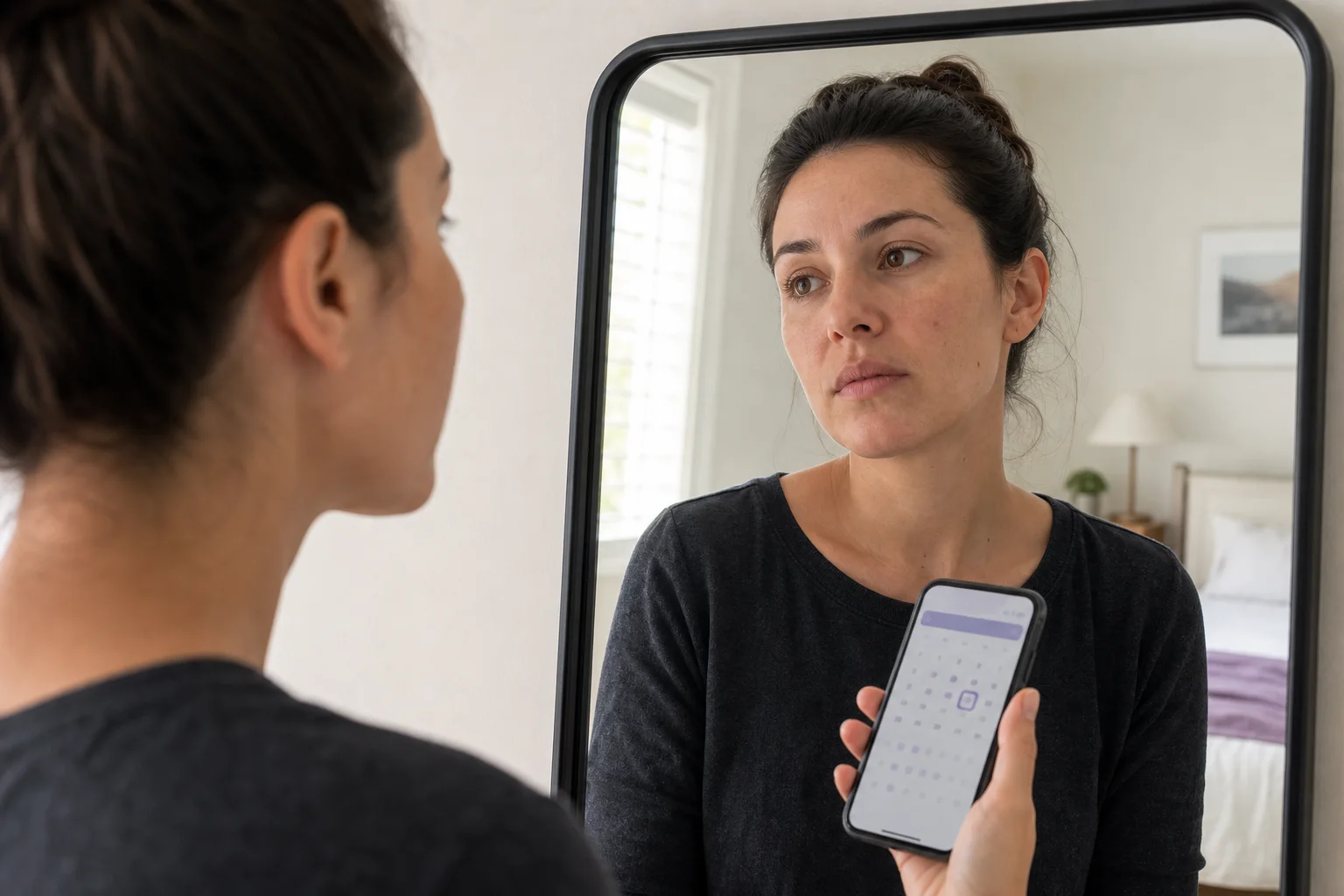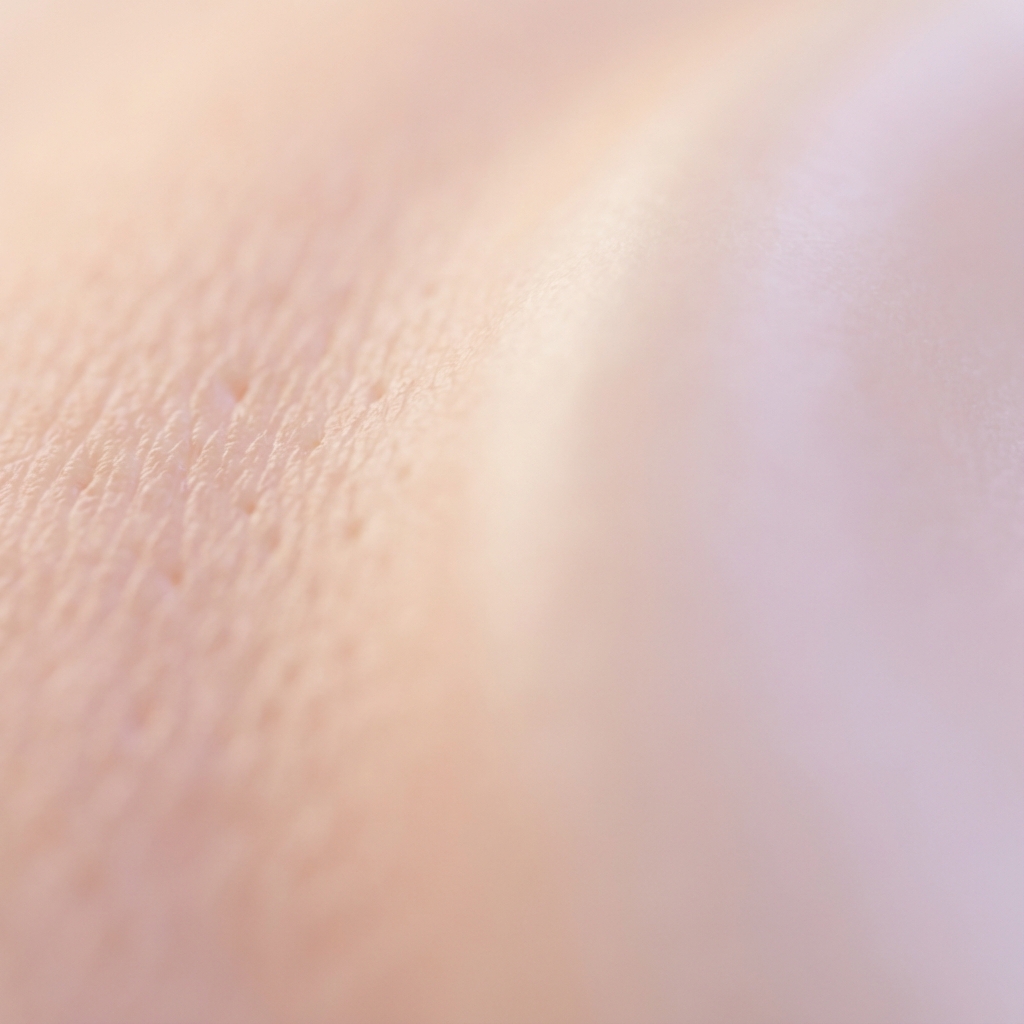
Visible pores and some unevenness are part of real skin. A magnifying mirror or a sharply lit selfie can make them feel like a problem that needs constant correction. Before adding another treatment, separate what you notice from what you know about its cause.
“Texture” is a description, not a diagnosis. It may refer to normal follicle openings, acne, dryness, irritation, scars or several things together. This guide explains common terms, useful observations and the limits of home comparisons. It does not promise poreless skin or a fixed improvement timeline.
At a Glance
- Pores are normal. Their visibility is not proof of poor hygiene.
- Describe the concern first. Dots, bumps, roughness, dents, color and discomfort are different observations.
- Home tests have limits. Stretching, touching or changing the light cannot diagnose the cause of texture.
- Treatment depends on the cause. An ingredient ladder is not a substitute for a product-specific plan.
- Seek assessment when needed. Pain, scarring, a changing lesion or persistent irritation should not wait for a cosmetic deadline.
This is part of the Pores & Texture Guide. Use it to prepare questions before investing in products or procedures.
What Are You Actually Noticing?
You can describe a change without assigning it a condition. Note where it is, when you first noticed it and whether it is painful, itchy, scaly or changing. Include recent product changes and active acne treatment.
| Observation | Useful detail | What it cannot establish |
|---|---|---|
| Small visible dots | Location, color and whether they have changed | Whether each dot is a filament, blackhead or another feature |
| Raised bumps | Tenderness, itch, inflammation and persistence | The cause from shape or a photograph alone |
| Rough or flaky areas | Discomfort, washing and recent applications | A specific barrier injury or a guaranteed recovery time |
| Dents or uneven shadows | History of acne, previous procedures and change over time | A scar subtype or which procedure is needed |
| A flat color change | Whether it followed inflammation or is new or changing | That every pigmented spot is a harmless acne mark |
There is no need to leave skin unmoisturized for a timed “wipe test,” stretch it repeatedly or squeeze a spot to see what emerges. These actions do not turn an observation into a reliable diagnosis.
If one side looks different
Tell a clinician about repeated friction, equipment or products that contact that area. Also mention whether the difference is new. A one-sided pattern does not prove that your phone, pillowcase or sleeping position caused it. Do not respond by disinfecting or scrubbing the skin more aggressively.
If you keep checking
A close-up view can make ordinary features difficult to ignore. Try keeping any tracking simple enough that it does not encourage picking or constant inspection. If concern about appearance is affecting daily life, that is worth discussing too; you do not need a severe-looking condition to ask for support.
Common Terms You May Hear
Visible Pores and Sebaceous Filaments
Pores include the openings of hair follicles. Sebaceous filaments are normal structures associated with the movement of oil to the skin surface. They can be noticeable without being acne. Cleveland Clinic explains how filaments differ from blackheads.
Small, fairly even dots may fit that description, but color, spacing and a photograph are not a certainty test for every spot. Do not use an extraction or a refill stopwatch to confirm the label. Filaments are not something a routine must permanently eliminate.
If visibility bothers you, ask whether gentle care or treatment of associated acne would be useful. Do not assume you need a particular acid concentration. Read Sebaceous Filaments vs Blackheads for the distinction and its limits.
Blackheads
Blackheads are open comedones, a type of acne involving a plugged follicle. Their dark appearance is not simply dirt that should be scrubbed away. NIAMS describes acne lesions and how they form.
A dark dot is not automatically a blackhead. If the diagnosis is uncertain, get advice before treating or extracting it. Squeezing to check how resistant a plug feels is not a safe diagnostic method.
Salicylic acid and some retinoids have roles in acne care, but the appropriate product, area and frequency depend on the actual plan. A leave-on product and a medicated cleanser are not interchangeable just because they share an ingredient name.
Closed Comedones and Other Bumps
Closed comedones are another form of acne. Skin-colored bumps can also have other explanations, so “sandpaper skin” or a certain location is not enough to choose a medicine. Mention itching, redness, pain, spread and any relation to a new product.
The AAD’s acne treatment overview describes different treatment options. The diagnosis and the kinds of lesions present matter; an online guide cannot automatically prescribe adapalene for every bump.
Avoid a fixed “purging” calendar. New or worsening bumps, persistent burning or a rash should be interpreted with the product warnings and professional advice. Familiar locations do not prove that a reaction is harmless.
Dryness and Irritation
Rough patches, flaking, tightness and stinging can make skin feel or look uneven. They do not identify a single cause. A new product may be relevant, but a reaction can also need assessment for a condition rather than another cosmetic adjustment.
Do not stop prescribed medicines for a generic barrier reset. Follow their warning instructions and ask the prescriber about significant irritation or changes to treatment. Avoid adding optional scrubs and acids while trying to understand the problem.
The Skin Barrier Guide discusses supportive care. There is no fixed seven-day or two-week period that proves the skin has healed or that a medicine is ready to restart.
Acne Scars and Post-Acne Marks
Acne can leave depressed or raised scars. Flat color changes after inflammation are a different concern, although they may occur alongside scars. The AAD’s scar descriptions explain these distinctions.
Rolling, boxcar and ice-pick are terms used for patterns of depressed scarring. They help a professional describe the skin; they are not a shopping chart. Mixed patterns and active acne can affect a plan.
Skincare, acne treatment and procedures have different roles. Some mild scarring may improve with treatment, while other concerns lead to discussion of procedures. It is too absolute to say every true scar needs a procedure or that a serum can fill every dent. Start with an assessment and your own priorities.
What a Treatment Discussion Can Cover
| Main concern | Questions to ask |
|---|---|
| Pore visibility without discomfort | Is this a normal feature, and what benefit is realistic if I choose to treat it? |
| Suspected blackheads or whiteheads | Is this acne, and which product and directions fit the area? |
| Painful or scarring acne | Can we address ongoing acne before focusing on existing texture? |
| Stinging or rough patches | Could this be irritation or another condition, and what should I do with current medicines? |
| Persistent dents | What scar types are present, and what are the benefits, limits and risks of options? |
There is no required progression from niacinamide to an acid to adapalene to tretinoin. A higher percentage or prescription status does not automatically make a product a better next step. Ask what the treatment is intended to change and how you will review its effect.
Build a Comfortable Foundation
Cleansing
Use a gentle method that removes what you wear without repeated scrubbing. Follow the actual directions, including any medicated-wash contact time. A foaming cleanser is not automatically unsuitable, and a compulsory oil massage is not necessary to “empty” pores.
The AAD’s cleansing guidance recommends gentle technique and washing after sweating. If washing repeatedly hurts, ask about the cause instead of increasing strength or friction.
Moisture and Sun Protection
Choose moisture that supports comfort and fits any treatment instructions. More layers are not proof of better barrier care. A moisturizing sunscreen can sometimes cover both morning roles if it feels sufficient and is used correctly.
Use broad-spectrum SPF 30 or higher as directed for exposure, with shade and protective clothing. Follow reapplication and water-resistance instructions. Do not reduce coverage to avoid white cast or make texture look smoother. AAD sunscreen guidance explains application.
Optional Products and Medicines
Give an optional product a clear purpose before adding it. Keep changes understandable, but follow a clinician’s plan when multiple treatments are intended together. Check amount, area, preparation, order and warning signs for each medicine.
Discuss pregnancy, pregnancy plans and breastfeeding before using a retinoid. Do not borrow a starter schedule from a friend or treat moisturizer layering as a guarantee against irritation. Adapalene and tretinoin have their own product-specific questions.
Habits That Can Make Assessment Harder
Picking and Extraction
Picking, squeezing and digging can cause irritation and injury. The AAD explains the risks of home popping and the role of professional extraction. Seeing material come out is not proof that the procedure was needed or that the cause is treated.
Pore strips and suction devices are not a diagnostic shortcut. They should not be described as always permanently enlarging pores either. Read Pore Strips and Blackhead Tools for a more careful discussion of their limits.
Chasing a Smooth Surface With More Exfoliation
Repeated scrubbing and extra acid applications can irritate skin. A rough feeling is not a reason to exceed the label. There is no combination chart that can promise safety for every formulation, and alternating nights is not an automatic solution for prescribed medicines.
Treating Every Photograph as a Result
Lighting angle, distance, camera processing and expression can change apparent texture. A smoother photo may reflect the setup rather than a biological change. Keep records comparable if you use them, and avoid interpreting a single flash image as evidence that treatment failed.
When Procedures May Be Worth Discussing
If texture remains a concern, a dermatologist can assess whether you have scars, visible pores, active acne or another issue. Ask what the proposed procedure targets, whether treatment is optional and what result is realistic for your skin.
Discuss recovery, pigment changes, infection, scarring, cost, operator experience and what happens if the outcome is disappointing. Different procedures and devices have different risks. Radiofrequency microneedling is not interchangeable with ordinary microneedling; the FDA has reported serious complications with certain RF microneedling uses.
No universal sequence or percentage of improvement applies to everyone. Subcision vs Microneedling and Fractional Laser for Acne Scars offer questions to take to a consultation.
When to Seek Care Sooner
Ask for assessment for painful or scarring acne, a rapidly changing or spreading problem, persistent irritation, or a spot that repeatedly bleeds or does not heal. A “texture” label should not delay examination of a concerning lesion.
Prompt care is important for severe pain, spreading warmth or redness, pus, fever, significant swelling or blistering. Seek emergency help for breathing difficulty or swelling of the lips, tongue or throat. You do not need to wait through a routine trial before reporting warning signs.
FAQ
Can pores disappear?
No treatment makes normal follicle openings disappear permanently. Some care or treatment can make them less noticeable, depending on the cause and individual response. The goal does not need to be a poreless appearance.
Can a stretch test tell pores from scars?
No. Some scars change appearance when skin is stretched, and lighting changes many surface features. Neither observation establishes a diagnosis or a treatment plan. See Pores or Acne Scars?.
How soon should texture improve?
It depends on what is being treated and how. Ask for a review plan tied to the actual concern. There is no single timeline for normal pores, acne, irritation and scarring, and worsening symptoms should not be ignored until a deadline.
Do I need regular facials or extractions?
Not automatically. Ask what a procedure would address and whether it is appropriate for the actual finding. Normal visible filaments do not create a medical need for extraction.
Can an app identify the right treatment?
An app can help organize photos and routine notes, but cannot establish a diagnosis from texture or prescribe the appropriate treatment. Use observations to support a conversation rather than to certify a home test.
Keep a Useful Record
Note the concern, your products and any question about their use. Get skncoach to organize your routine and photos. Take that record to a professional when needed; the app cannot diagnose a lesion or guarantee a texture change.
Sources
- Cleveland Clinic: Sebaceous filaments
- NIAMS: Acne
- AAD: Acne treatment
- AAD: Acne scar signs and symptoms
- AAD: Face washing
- AAD: Applying sunscreen
- AAD: Pimple popping and extraction
- FDA: Risks of certain RF microneedling uses
General education, not a diagnosis or personal treatment plan. Follow local product directions and professional advice for your circumstances.