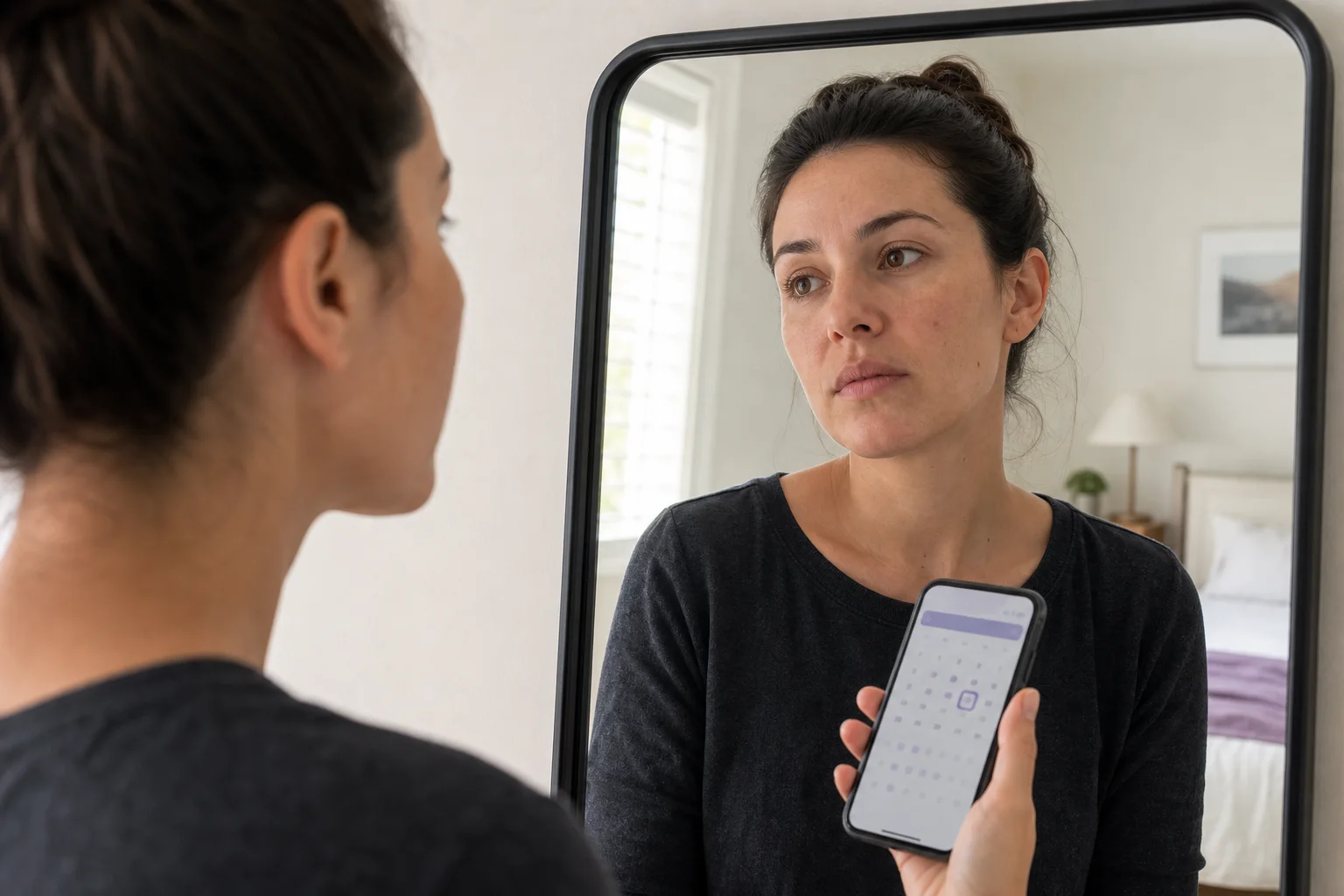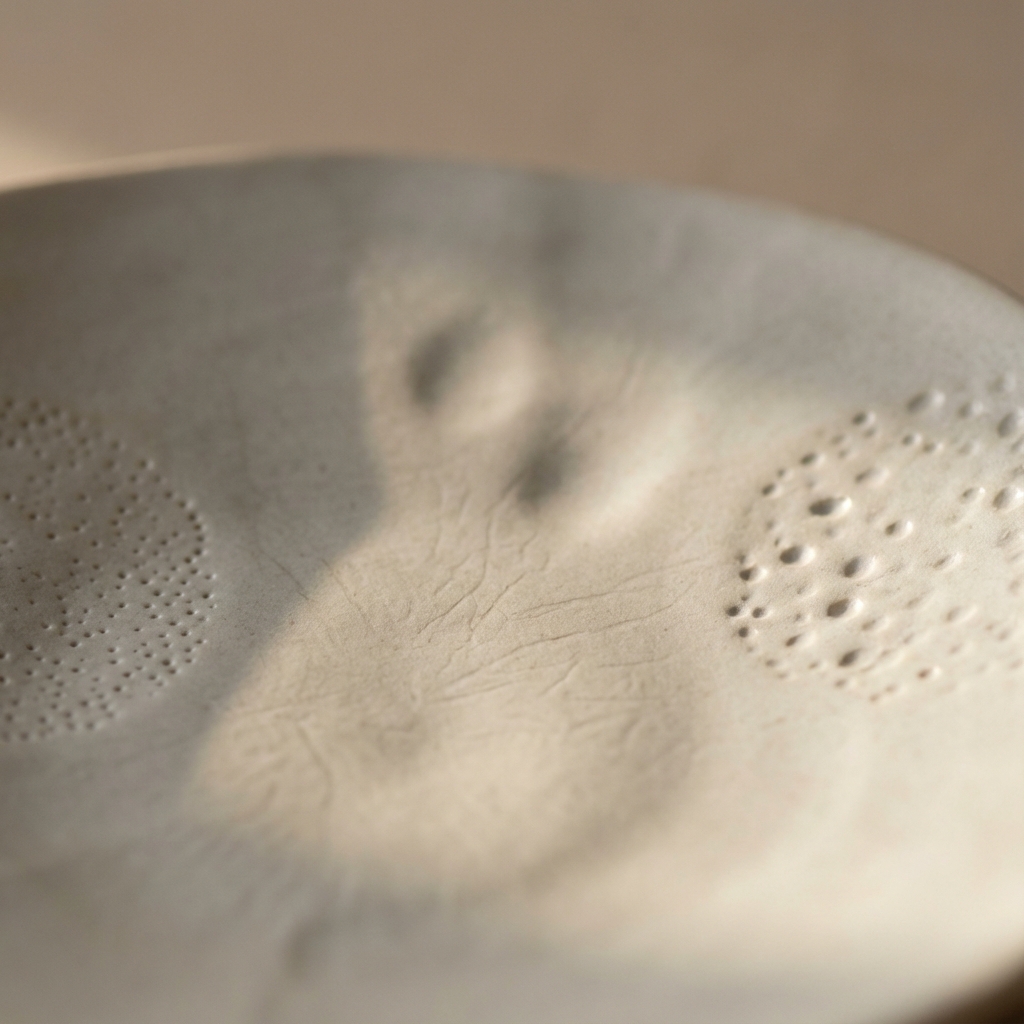
Visible dots, dents and shadows can be difficult to interpret, especially in a close-up photograph. Pores and acne scars can occur together, and neither a phone camera nor a home test can reliably assign every feature to one category.
A stretch or shadow test cannot establish whether a feature is a pore or scar. Some depressed scars change appearance when stretched, and many skin features look different as the light moves. Before buying a procedure or a new treatment, use observations to prepare for an assessment.
At a Glance
- Pores are normal openings. Their visibility varies; they are not a defect that must be removed.
- Scars involve tissue changes. Acne may leave depressed or raised scars, while flat color marks are a different concern.
- Lighting changes appearance. It does not reveal a diagnosis by itself.
- Treatment is individual. No home test selects subcision, laser or a particular acid.
- Your choice matters. Not treating a cosmetic concern is also an option.
This article is part of Skin Texture & Visible Pores.
Understand the Terms Without Self-Diagnosing
Pores and Pore Visibility
Pores include hair-follicle openings that are naturally present in skin. Oiliness, clogging and changes in skin firmness can affect how noticeable they look. The AAD’s guidance on visible pores discusses gentle care and possible treatment approaches.
A pore does not become “normal” only when a camera can no longer see it. Treatment may reduce visibility, but a promise of permanent elimination is not realistic. A dark dot may also need to be distinguished from a blackhead, filament or another lesion.
Acne Scars and Flat Marks
Depressed scars form indentations; raised scars project above surrounding skin. A flat pink, red, brown or darker mark after acne is not the same as a structural depression, though both can occur in one area. The AAD explains acne scar signs.
Do not assume every new dark spot is an acne mark. A changing, bleeding or non-healing lesion deserves assessment. A history of acne can provide context, but does not establish the identity of every later feature.
| Feature you notice | Description you can record | Question for assessment |
|---|---|---|
| Visible dots | Location, color and whether they are stable | Are these normal pores, filaments, acne or something else? |
| Depressions | When noticed, prior acne and whether the appearance changes | Are scars present, and are there mixed patterns? |
| Raised areas | Duration, symptoms and growth | Is this active acne, a raised scar or another lesion? |
| Flat color marks | Relation to previous inflammation and any change | Is this post-inflammatory color or a different finding? |
Why the Stretch Test Is Not a Diagnosis
Stretching changes tension across the skin surface. It can alter the appearance of normal features and some scars. The fact that a depression becomes shallower does not prove it is a pore, and a feature that remains visible does not prove a particular scar subtype.
A clinician may examine skin from different angles or with different techniques as part of a wider assessment. That does not validate a home rule such as “flattens means pores.” History, examination and the actual concern all matter.
Avoid repeatedly pulling the skin or pressing a suspected lesion to get a clearer result. Do not use an apparent test result to decide you need an invasive procedure or that a new lesion can be ignored.
What Lighting Can and Cannot Tell You
Light from the side creates shadows; more diffuse light can soften them. Camera distance, processing, focus, makeup and facial expression can also affect how texture appears. No single lighting setup is a perfect representation of how everyone sees you.
For a Useful Record
If photos help, use reasonably similar lighting, distance and camera settings. Avoid beauty filters and record relevant context, such as a recent procedure or active irritation. You do not need to capture every angle or make the texture look as dramatic as possible.
For a Consultation
Show the clinician the area that concerns you and describe when you notice it. A photo may support the history, especially if a change is intermittent. It cannot prove depth, tethering or whether a specific device will help.
If Photos Increase Distress
You can reduce the frequency or stop taking them. A written description and a clinical examination remain useful. Concern about appearance is worth discussing if it leads to avoidance, repeated checking or picking, even if someone else considers the feature minor.
The Names Used for Depressed Scars
These terms are descriptions used during assessment, not instructions for choosing a procedure at home.
- Rolling scars: broad depressions that can create an uneven, wave-like contour.
- Boxcar scars: depressions with more defined edges; their depth and width vary.
- Ice-pick scars: narrow, deep-looking pits.
Several patterns may coexist. Active acne, skin tone, previous treatments and the condition of the surrounding skin can affect the plan. A diagram or a photograph of someone else is not enough to classify your own skin reliably.
The AAD’s scar-treatment overview describes why treatment is tailored. A label alone does not establish that subcision must come first or that a certain type of laser is appropriate.
Where Skincare Fits
Gentle cleansing, appropriate moisture and sun protection support everyday care. Acne treatment can help address ongoing breakouts, which matters when new scars are forming. Products for color changes have a different goal from a procedure intended to change a depression.
It is too broad to say skincare can never help any scar, or that every true scar requires a procedure. Some mild scarring may respond to treatment; deeper or more complex concerns may lead to other options. Ask what a proposed product can realistically change and what evidence applies to your situation.
Do not progress from acids to stronger retinoids simply because a home test appeared to show pores. Follow the exact product and prescriber’s directions, including precautions for pregnancy and other circumstances. More irritation is not evidence of more effective remodeling.
When to Consider a Procedure Consultation
A consultation can be useful if persistent texture bothers you and you want to understand the options. You do not need to try every serum first, and a consultation does not oblige you to buy treatment.
Ask the clinician to explain what they see, what they propose to target and whether ongoing acne or another condition should be addressed first. State your priorities: limited downtime, avoiding pigment change, budget and a modest improvement can matter more than an ambitious claim.
| Ask about | Why it matters |
|---|---|
| The finding being treated | Pore visibility, color and depressed scars are different targets |
| Expected benefit and uncertainty | A standard percentage does not predict your result |
| Alternatives, including no procedure | You should understand the choices before agreeing |
| Risks for your skin and history | Pigment changes, infection and scarring can matter |
| Operator and device experience | The procedure name alone does not establish competence |
| Sessions, recovery and total cost | An initial price may not describe the entire plan |
| Follow-up and complications | Know who will assess problems and how to contact them |
Procedure Categories You May Discuss
Subcision, microneedling, fractional lasers, focal chemical techniques and surgical methods have different purposes and risks. Some plans combine methods, but there is no universal order or session count. Subcision vs Microneedling, TCA CROSS and Fractional Laser explain consultation questions.
Do not attempt medical needling, concentrated acid treatment or scar cutting at home. A device sold for home use is not evidence that it can safely reproduce a clinical procedure.
Radiofrequency microneedling also differs from ordinary microneedling. The FDA’s safety communication reports serious complications with certain uses, including burns, scarring, fat loss and nerve damage. Ask about the exact device and indication rather than accepting “safe for every skin tone.”
When the Concern Should Not Wait
Painful or scarring active acne deserves care without waiting for a cosmetic routine to fail. A new or changing lesion, repeated bleeding or a spot that does not heal also needs assessment rather than a pore-versus-scar test.
Seek prompt advice for rapidly spreading redness, warmth, pus, severe pain, fever or significant swelling after manipulating the skin or having a procedure. Follow the clinic’s aftercare and contact instructions; do not add acids to try to correct a complication.
FAQ
Can I have visible pores and acne scars together?
Yes. Different features can coexist, so improvement in one may leave another unchanged. Ask the clinician to describe the separate treatment goals rather than promising to erase all texture.
Does texture disappearing when I stretch mean it is not a scar?
No. Stretching can change some scars as well as other surface features. It cannot settle the diagnosis or select a treatment.
Are shadows proof of scars?
No. Shadows depend on lighting and surface shape. They are an observation to describe, not a reliable home diagnostic rule.
Will a procedure improve scars by a fixed percentage?
No percentage applies to everyone. Results depend on the finding, procedure, skin, operator and how improvement is measured. Ask for realistic expectations and the possibility of limited benefit, not a guaranteed range.
Can old scars change in appearance?
Skin, lighting, active acne and other factors can change what you notice. Do not assume a new change must be harmless old scarring. Ask for assessment if the feature changes unexpectedly or develops symptoms.
Can an app distinguish pores from scars?
Photos and notes can support a discussion, but an app cannot certify a scar subtype, assess every lesion or decide which procedure you need. Use skncoach to organize observations and take them to your consultation.
Sources
- AAD: Visible facial pores
- AAD: Acne scar signs and symptoms
- AAD: Acne scar consultation and treatment
- FDA: RF microneedling safety communication
General education, not a diagnosis or personal treatment plan. Follow professional advice for your circumstances.